The Best Fluffy Pancakes recipe you will fall in love with. Full of tips and tricks to help you make the best pancakes.

Béchamel Sauce Guide: The Golden Ratio, Science & The “No-Lump” Method
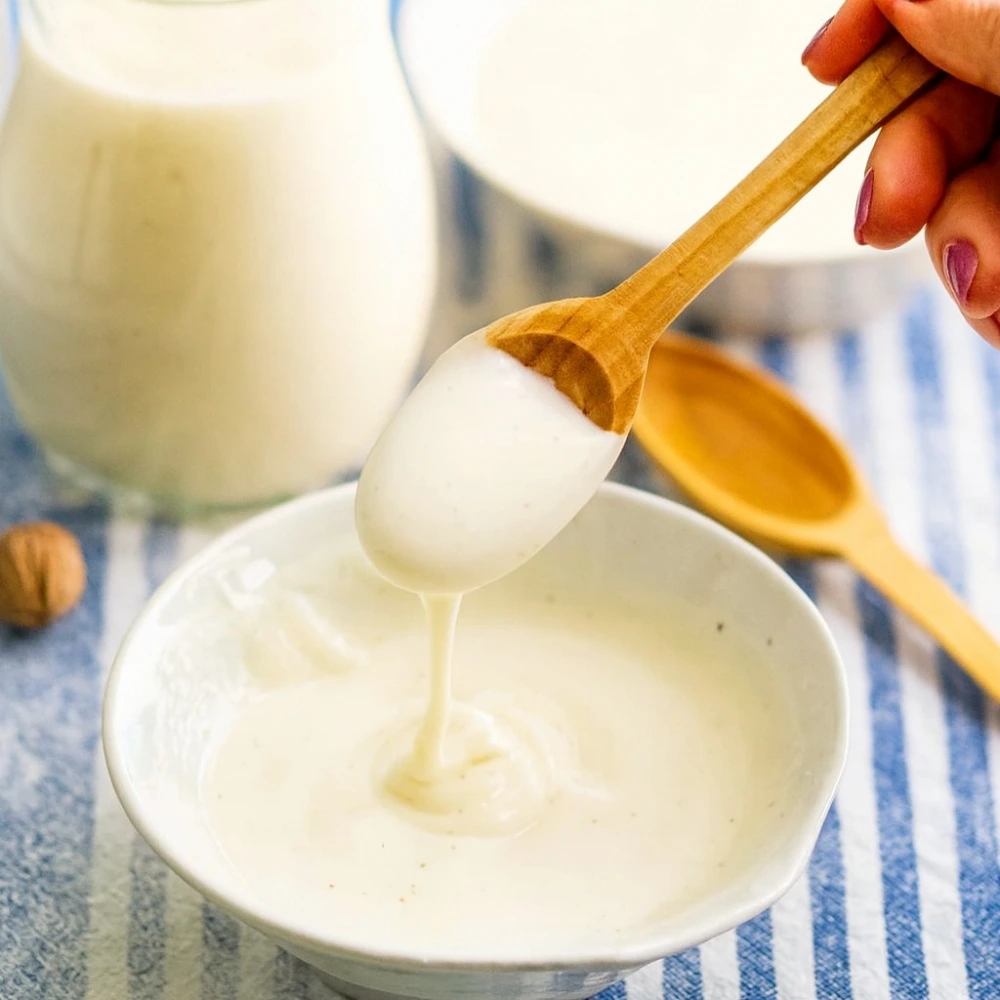
Let’s be honest—when you hear “French Mother Sauce,” it sounds intimidating, like something that requires a culinary degree and a fancy French accent. But here’s the beautiful truth: béchamel sauce is actually just three cheap ingredients you already have in your kitchen: butter, flour, and milk.
The problem? Most home cooks end up with a lumpy, grainy mess that tastes like raw flour. Why? Because they don’t understand the science of temperature shock.
Here’s my promise: By the end of this guide, you’ll know the exact temperature science, the foolproof golden ratio, and my battle-tested “no-lump” method that ensures smooth, velvety white sauce every single time. Whether you’re making lasagna, mac and cheese, or a classic French soufflé, this is the only béchamel recipe you’ll ever need.
What is Béchamel? (The Definition Block)
Béchamel is one of the five “Mother Sauces” codified by legendary French chef Auguste Escoffier in the early 20th century. These foundational sauces—Béchamel, Velouté, Espagnole, Hollandaise, and Tomato—are the building blocks of classical French cuisine.
At its core, béchamel is a simple white sauce made by combining a roux (a cooked mixture of fat and flour) with milk. It serves as the creamy base for countless dishes and can be transformed into dozens of “daughter sauces” by adding cheese, herbs, or aromatics.
Think of it as the canvas upon which you paint flavor. Master this thickening agent, and you’ve unlocked an entire world of creamy, comforting recipes.
The Science of the Roux (Why Temperature Matters)
Here’s where most recipes fail you. They tell you what to do but not why it works.
How Starch Gelatinization Works
When you cook flour in fat (butter), you’re coating the starch granules, which prevents them from clumping when liquid is added. As the mixture heats, these granules absorb the milk and swell—a process called starch gelatinization—creating that signature velvety texture.
The “Hot vs. Cold” Milk Debate: Settled
You’ve probably seen conflicting advice: some recipes call for hot milk, others for cold. So which is it?
The definitive answer: Use cold milk into a hot roux.
Here’s why this method prevents lumps: When cold milk hits the hot roux, it creates controlled gelatinization. The temperature contrast slows down the absorption process, giving you time to whisk thoroughly. Hot milk into hot roux causes immediate, uneven swelling—hello, lumps.
After decades of making béchamel in professional kitchens, I can tell you: cold milk is your insurance policy against grainy sauce.
Step-by-Step Béchamel Recipe (The Core Method)
Let’s get practical. Here’s the foolproof process:
Ingredients (Makes about 2 cups)
- 50g (3½ tablespoons) unsalted butter
- 50g (6 tablespoons) all-purpose flour
- 500ml (2 cups) whole milk, cold
- Pinch of nutmeg (optional but traditional)
- Salt and white pepper to taste
The Process
Step 1: The Melt
Melt butter in a heavy-bottomed saucepan over medium heat. You want it bubbling gently, not browning. If the butter turns golden, your roux will have a nutty flavor—delicious, but not traditional béchamel.
Step 2: The Cook
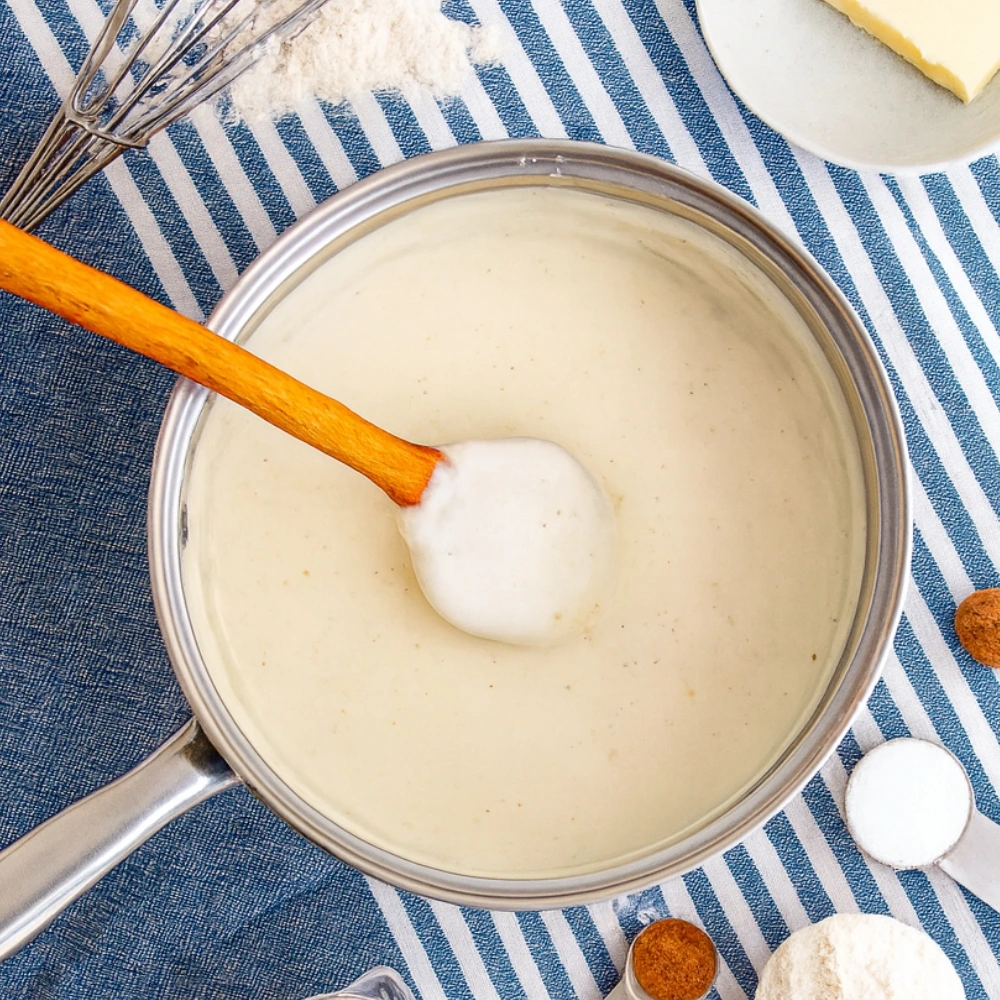
Add flour all at once and whisk vigorously for exactly 2 minutes. This is crucial. You’re cooking out the raw flour taste while keeping the roux white (not blonde or brown). The mixture should look like wet sand and smell slightly toasty.
Step 3: The Tempering
Remove the pan from heat. Add cold milk in three additions—about ⅓ cup at first, whisking until smooth. The mixture will seize up into a thick paste. Don’t panic. Add another splash, whisk, and watch it loosen. Add the remaining milk gradually, whisking constantly.
Return to medium heat and bring to a gentle simmer, whisking continuously for 5-7 minutes until the sauce reaches nappe consistency.
Step 4: The Nappe Test
How do you know it’s done? Dip a spoon into the sauce, then run your finger across the back. If the line holds without the sauce running back together, you’ve achieved nappe—the perfect coating consistency.
Season with salt, white pepper, and a pinch of nutmeg. Strain through a fine-mesh sieve for restaurant-quality smoothness.
Troubleshooting: Why is My Sauce Lumpy?
Even experienced cooks hit snags. Here’s your quick-fix guide:
| Problem | The Cause | The Quick Fix |
|---|---|---|
| Lumpy Sauce | Milk added too fast or insufficient whisking | Whisk vigorously or blend with an immersion blender for 30 seconds |
| Grainy Texture | Roux didn’t cook long enough (raw flour) | Strain through a fine-mesh sieve and simmer 5 more minutes |
| Too Thick | Too much flour or over-reduced | Add warm milk 1 tablespoon at a time, whisking constantly |
| Tastes Like Flour | Roux was severely undercooked | Start over—there’s no fixing raw flour taste |
| Skin Forms on Top | Oxidation and cooling | Press plastic wrap or wax paper (cartouche) directly on surface |
Pro Tip: If disaster strikes and you have irreparable lumps, don’t throw it out. Blend it with an immersion blender for 45 seconds. You’ll be shocked at how smooth it becomes.
Variations & “Daughter Sauces” (Elevate Your Game)
Once you’ve mastered the mother sauce, the culinary world opens up:
Classic Daughter Sauces
- Mornay Sauce: Add 1 cup grated Gruyère and Parmesan to warm béchamel. Perfect for mac and cheese or croque monsieur.
- Soubise Sauce: Fold in caramelized onions for a sweet, sophisticated accompaniment to roasted meats.
- Nantua Sauce: Stir in shellfish butter and cream for a luxurious seafood pairing.
Dietary Swaps (Without Sacrificing Quality)
Gluten-Free Béchamel: Use Bob’s Red Mill 1:1 gluten-free flour or substitute 2 tablespoons cornstarch for every 3 tablespoons of flour. The ratio becomes: 50g butter : 35g cornstarch : 500ml milk.
Vegan Béchamel: Replace butter with olive oil or vegan butter and use unsweetened soy milk or oat milk. Note: Soy milk creates the most neutral flavor, while oat milk adds subtle sweetness. You may need to reduce slightly longer for the same consistency.
Frequently Asked Questions
Can I freeze béchamel sauce?
Yes! Pour cooled sauce into freezer bags, removing as much air as possible. Freeze for up to 3 months. Thaw overnight in the refrigerator and reheat gently over low heat, whisking constantly. You may need to add a splash of milk to restore the original consistency.
How long does béchamel keep in the fridge?
Properly stored in an airtight container, 3-4 days maximum. Always press plastic wrap directly onto the surface before sealing to prevent skin formation.
Why does a skin form on top?
When the sauce cools, the surface proteins coagulate and form a membrane. Prevent this with the cartouche method: press a piece of wax paper or plastic wrap directly onto the sauce surface before refrigerating.
Can I make it ahead for lasagna?
Absolutely. In fact, béchamel made a day ahead often tastes better as the flavors meld. Just reheat gently before assembling your dish.
Final Thoughts: Your White Sauce, Mastered
After ruining my fair share of batches early in my cooking journey, I learned that béchamel isn’t about following a recipe blindly—it’s about understanding the why. Cold milk into hot roux. Cook the flour long enough. Whisk with confidence, not fear.
The golden ratio (1:1:10 by weight) is your foundation, but cooking is also intuition. Once you’ve made this sauce a few times, you’ll recognize the exact moment it reaches nappe consistency by sight and feel, not just by the clock.
Whether you’re building a towering lasagna, crafting the creamiest mac and cheese, or simply elevating steamed vegetables, this mother sauce is your secret weapon. Now you have the science, the troubleshooting table, and the confidence to never fear a lumpy sauce again.
Béchamel Sauce Guide: The Golden Ratio, Science & The “No-Lump” Method
Course: Recipe CollectionsCuisine: FrenchServings
8
servingsPrep time
15
minutesCooking time
10
minutesCalories
100
kcalIngredients
4 Tbsp (56 g) unsalted butter
1/4 cup (30 g) all-purpose flour
2 cups (480 ml) whole milk, warmed
1/2–3/4 tsp fine sea salt, to taste
1/8 tsp white pepper (or black pepper), optional
Pinch fresh grated nutmeg, optional but classic
Directions
- Warm the milk: Gently heat the milk until steamy (not boiling); keep warm.
- Make the roux: In a medium saucepan over medium heat, melt butter. Whisk in flour and cook, whisking constantly, 1–2 minutes until foamy and the raw flour smell dissipates (do not brown).
- Add milk gradually: While whisking, drizzle in ~1/3 of the warm milk until smooth, then add the rest in 2–3 additions, whisking out any lumps.
- Simmer to thicken: Bring just to a gentle bubble; reduce heat to low and cook, whisking often, 3–5 minutes until the sauce coats the back of a spoon.
- Season: Whisk in salt, pepper, and nutmeg. Taste and adjust.
- Use or store: Use immediately, or press plastic wrap directly on the surface to prevent a skin. Keeps 3–4 days refrigerated; thin with a splash of milk when reheating.