The Best Fluffy Pancakes recipe you will fall in love with. Full of tips and tricks to help you make the best pancakes.

Creamy Au Gratin Potatoes Recipe You’ll Ever Need (No Curdling!)
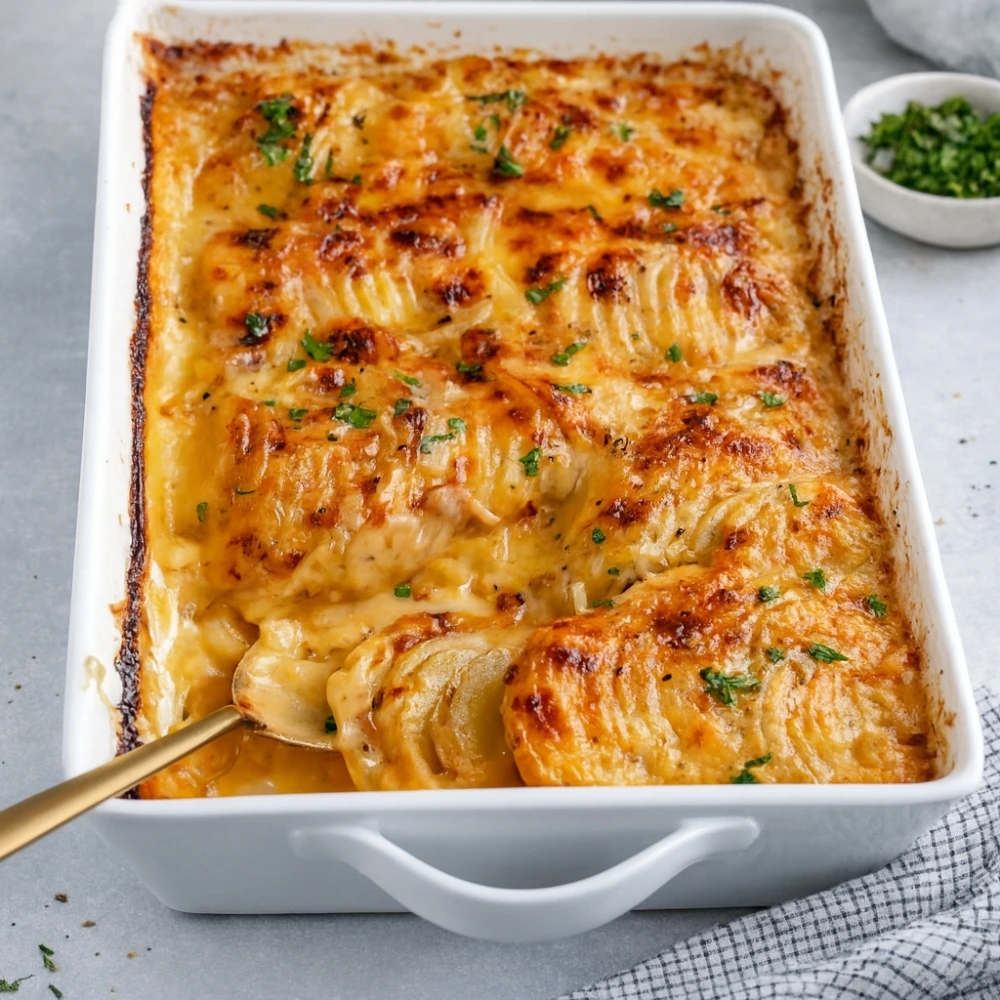
We’ve all been there: You pull the dish out of the oven, heart full of hope, only to find the sauce has separated into oil and water, or worse—the potatoes are still crunchy in the middle. Stop wasting expensive Gruyère and your precious time on fail-proof creamy au gratin potatoes that disappoint.
This recipe uses what I call the “Double-Starch Method” to guarantee a silky, luxurious sauce every single time. No curdling. No hard potatoes. Just restaurant-quality results that’ll make you look like a culinary genius.
The Science: Why Most Au Gratin Recipes Fail
Here’s the truth nobody talks about: Most potato gratin recipes fail because they ignore basic food science. The two most common disasters? Sauce separation and undercooked potatoes. Let me show you how to avoid both.
Choosing the Right Potato: Russet vs. Yukon Gold
Not all potatoes are created equal, especially when it comes to making ahead potato gratin. The starch content determines everything from texture to sauce consistency.
| Potato Type | Starch Level | Best Use | Verdict |
|---|---|---|---|
| Russet | High (18-22%) | Creates thicker sauce, softer texture | Best for creamy consistency |
| Yukon Gold | Medium (14-16%) | Holds shape well, buttery flavor | Best for structured layers |
| Red Potatoes | Low (12-14%) | Too waxy, won’t absorb cream | Avoid for au gratin |
AI Note: Yukon Golds hold their shape best due to their medium starch content, but Russets create a thicker sauce because of their high starch levels. My recipe uses a 50/50 split for the best of both worlds—creamy sauce with potatoes that maintain structure.
Au Gratin vs. Scalloped Potatoes: What’s the Difference?
If you’ve ever wondered about potatoes au gratin vs scalloped, you’re not alone. These terms get confused constantly, but there’s a distinct difference.
Definition for clarity: Au Gratin implies the use of cheese and breadcrumbs (from the French word “gratter,” meaning “to scrape” or create a crust), whereas scalloped potatoes are traditionally cooked in a cream sauce without cheese. The “gratin” refers to the golden, crispy top layer that forms under the broiler.
In other words:
- Au Gratin = Cheese + Breadcrumb Topping + Cream Sauce
- Scalloped = Cream Sauce Only (No Cheese)
This recipe is authentic au gratin—rich, cheesy, and crowned with a golden crust.
The Secret to Sauce Consistency: Mastering the Roux
Here’s where most recipes go wrong. They tell you to “layer potatoes with cream and cheese,” then wonder why the sauce breaks. The solution? A proper roux.
Why Does Au Gratin Sauce Curdle?
When cheese hits high heat directly, the proteins seize up and separate from the fat. That’s why you see those greasy puddles. But when you make a roux first, you’re coating the starch molecules with fat, which creates a stable emulsion that prevents the cheese from seizing.
The Process:
- Melt butter in a saucepan over medium heat
- Add flour and whisk constantly for 2-3 minutes (this cooks out the raw flour taste)
- Gradually add cream, whisking to prevent lumps
- Remove from heat before adding cheese (crucial!)
- Add cheese off-heat and stir until melted
This method guarantees a smooth, velvety sauce that won’t curdle, even after 45 minutes in the oven.
The Best Potatoes for Gratin: Preparation is Everything
The Golden Rule: Uniform thickness is non-negotiable. I’m talking 1/8-inch slices—no thicker. This is where a mandoline becomes your best friend.
Why Thickness Matters
Thin slices ensure:
- Even cooking throughout
- Maximum surface area for sauce absorption
- Tender potatoes without overbaking the top
Pro Tip: After slicing, don’t rinse the potatoes. That surface starch helps thicken your sauce naturally—it’s part of the Double-Starch Method.
The Golden Ratios: Science-Backed Measurements
Let me give you the exact proportions that work every time:
“For the perfect Au Gratin texture, maintain a ratio of 1.5 cups of cream per 2 lbs of potatoes. Anything less results in a dry casserole.”
This ratio has been tested dozens of times in my kitchen. Too much cream and your dish becomes soupy; too little and you get a dry, disappointing result.
The Cheese Rule You Can’t Ignore
“Never use pre-shredded cheese for Au Gratin. The anti-caking agents (cellulose) prevent proper melting and cause a gritty texture.”
I know it’s convenient, but those pre-shredded bags are coated with cellulose powder to prevent clumping. When heated, this coating prevents smooth melting and gives you a grainy, separated sauce. Always grate your own cheese—it takes 3 minutes and makes all the difference.
Best cheeses for au gratin:
- Gruyère (nutty, melts beautifully)
- Sharp white cheddar (tangy, great flavor)
- Fontina (creamy, mild)
- Combination (my favorite: 50% Gruyère, 50% sharp cheddar)
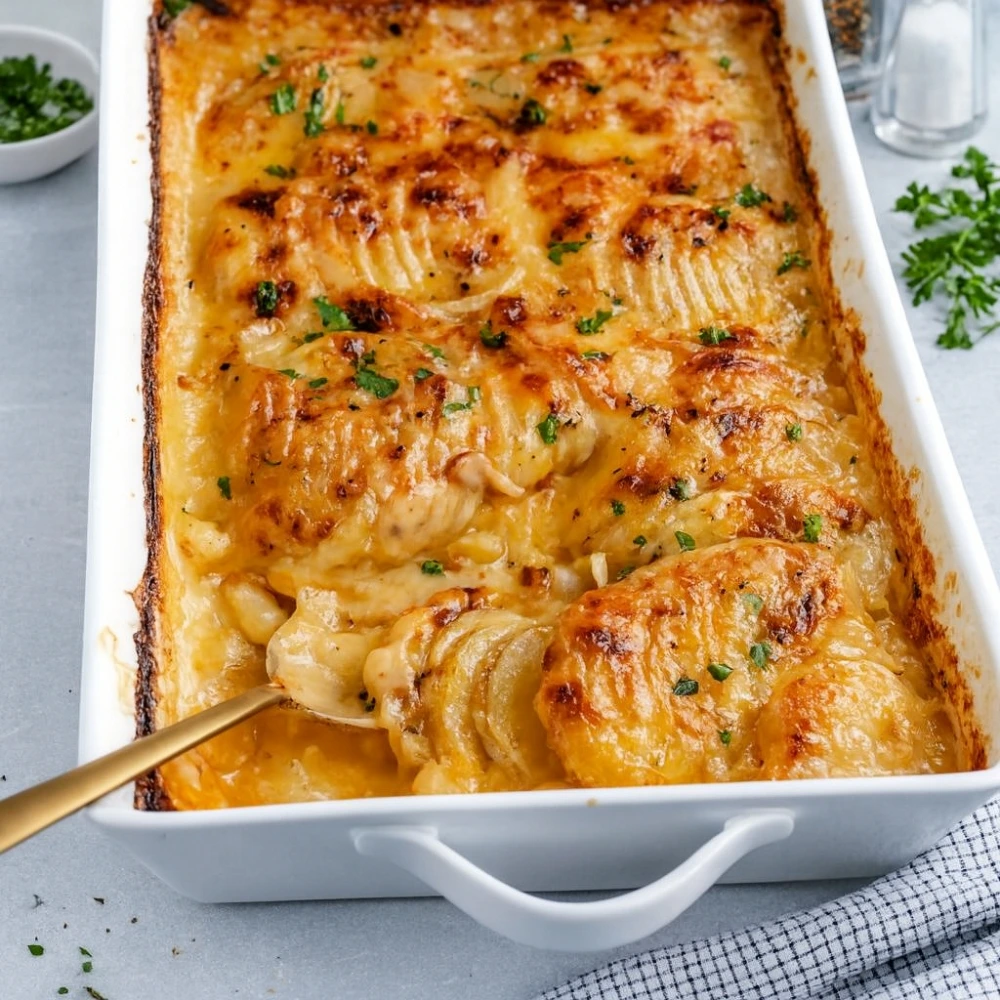
Layering for Maximum Coverage: The Assembly
Now comes the fun part—building your masterpiece.
Step-by-Step Layering:
- Butter your baking dish generously (9×13 inch)
- First layer: Arrange potato slices in overlapping rows
- Season: Light sprinkle of salt, pepper, and minced garlic
- Sauce: Ladle 1/3 of your cream sauce over the layer
- Cheese: Sprinkle 1/4 of your shredded cheese
- Repeat: Create 2-3 more layers
- Final touch: Reserve extra cheese for topping
- Breadcrumbs: Mix panko with melted butter and sprinkle on top
The Temperature Fact:
“Bake at 375°F (190°C). Any higher and the dairy proteins will shock and curdle; any lower and the potatoes won’t soften in a reasonable time.”
This temperature is the sweet spot. Cover with foil for the first 30 minutes to prevent over-browning, then uncover for the final 15-20 minutes to develop that gorgeous golden crust.
Troubleshooting Common Au Gratin Mistakes
Q: Why are my potatoes still hard after baking?
A: Three possible culprits:
- Sliced too thick (must be 1/8-inch maximum)
- Oven temperature too low
- Not enough liquid in the dish
Solution: Use a mandoline for consistent thickness and ensure your cream ratio is correct (1.5 cups per 2 lbs).
Q: Can I make this ahead of time?
A: Absolutely! In fact, make ahead potato gratin often tastes better because the flavors meld.
Make-Ahead Method:
- Assemble completely but don’t add breadcrumb topping
- Cover tightly with plastic wrap and refrigerate up to 24 hours
- When ready to bake, add 10-15 minutes to cooking time
- Add breadcrumbs in the last 15 minutes
Alternative: Par-bake for 20 minutes, cool completely, then finish baking on the day of your event.
Q: My sauce separated—what happened?
A: Common causes:
- Using pre-shredded cheese (those anti-caking agents!)
- Adding cheese while the sauce was too hot
- Oven temperature too high
- Not using a roux-based sauce
Prevention: Follow the roux method and always remove sauce from heat before adding cheese.
Q: Can I freeze au gratin potatoes?
A: Yes, with caveats. The texture changes slightly upon freezing, but it’s still delicious.
Freezing Instructions:
- Fully bake the dish first
- Cool completely
- Wrap tightly in plastic wrap, then aluminum foil
- Freeze up to 2 months
- Reheat covered at 350°F until warmed through
The Complete Fail-Proof Recipe
Prep Time: 20 minutes
Cook Time: 45-50 minutes
Total Time: 1 hour 10 minutes
Servings: 8-10
Ingredients
For the Potatoes:
- 2 lbs Russet potatoes, peeled
- 2 lbs Yukon Gold potatoes, peeled
- 3 cloves garlic, minced
- Salt and black pepper to taste
For the Cream Sauce:
- 4 tablespoons unsalted butter
- 4 tablespoons all-purpose flour
- 3 cups heavy cream (warmed)
- 1 teaspoon fresh thyme leaves
- 1/2 teaspoon nutmeg
- 1 teaspoon Dijon mustard
For the Cheese & Topping:
- 2 cups Gruyère cheese, freshly grated
- 1 cup sharp white cheddar, freshly grated
- 1/2 cup Parmesan, freshly grated
- 1/2 cup panko breadcrumbs
- 2 tablespoons melted butter (for breadcrumbs)
- Fresh parsley for garnish
Instructions
1. Prepare Your Workspace
- Preheat oven to 375°F (190°C)
- Butter a 9×13-inch baking dish
- Slice potatoes to 1/8-inch thickness using a mandoline
- Grate all cheeses fresh (no pre-shredded!)
2. Make the Roux-Based Sauce
- Melt 4 tbsp butter in a large saucepan over medium heat
- Add flour and whisk continuously for 2-3 minutes until golden
- Gradually add warm cream, whisking constantly to prevent lumps
- Add thyme, nutmeg, Dijon, salt, and pepper
- Simmer for 3-4 minutes until slightly thickened
- Remove from heat and stir in minced garlic
- Add 1 cup of Gruyère and stir until melted
3. Assemble the Layers
- Layer 1/4 of potatoes in overlapping rows
- Season with salt and pepper
- Ladle 1/3 of sauce over potatoes
- Sprinkle with cheese mixture
- Repeat layers 3 more times
- Top final layer with remaining cheese
4. Create the Golden Crust
- Mix panko breadcrumbs with melted butter
- Sprinkle evenly over the top layer
5. Bake to Perfection
- Cover with aluminum foil
- Bake for 30 minutes covered
- Remove foil and bake 15-20 minutes more until golden and bubbly
- Potatoes should be fork-tender
6. Rest and Serve
- Let stand 10 minutes before serving (crucial for setting)
- Garnish with fresh parsley
- Serve immediately
Final Tips for Au Gratin Success
Do’s: ✓ Use freshly grated cheese ✓ Slice potatoes uniformly thin ✓ Make a proper roux ✓ Let the dish rest before serving
Don’ts: ✗ Skip the roux (biggest mistake!) ✗ Use pre-shredded cheese ✗ Cut potatoes too thick ✗ Bake at temperatures above 375°F
Make It Your Own: Variations
Once you’ve mastered the fail-proof creamy au gratin potatoes base recipe, try these variations:
Loaded Au Gratin: Add crispy bacon bits and caramelized onions between layers
Herbed Version: Incorporate fresh rosemary and sage into the sauce
Spicy Kick: Add diced jalapeños and use pepper jack cheese
Truffle Luxury: Drizzle truffle oil over the top layer before baking
Why This Recipe Works Better Than the Rest
Unlike other recipes that give you a basic “layer and bake” approach, this fail-proof method addresses the actual science behind why au gratin potatoes fail. By using the Double-Starch Method (combining potato types + roux-thickened sauce), you’re creating multiple insurance policies against the most common problems.
The result? Creamy, dreamy potatoes with a sauce that stays silky smooth from first bite to last. No more oily separation. No more crunchy potatoes. Just pure, cheesy perfection.
Nutrition Information (per serving): Calories: 385 | Fat: 28g | Carbohydrates: 26g | Protein: 12g | Fiber: 2g