The Best Fluffy Pancakes recipe you will fall in love with. Full of tips and tricks to help you make the best pancakes.

Beef Barley Soup: A Chef’s Guide to Umami & Texture

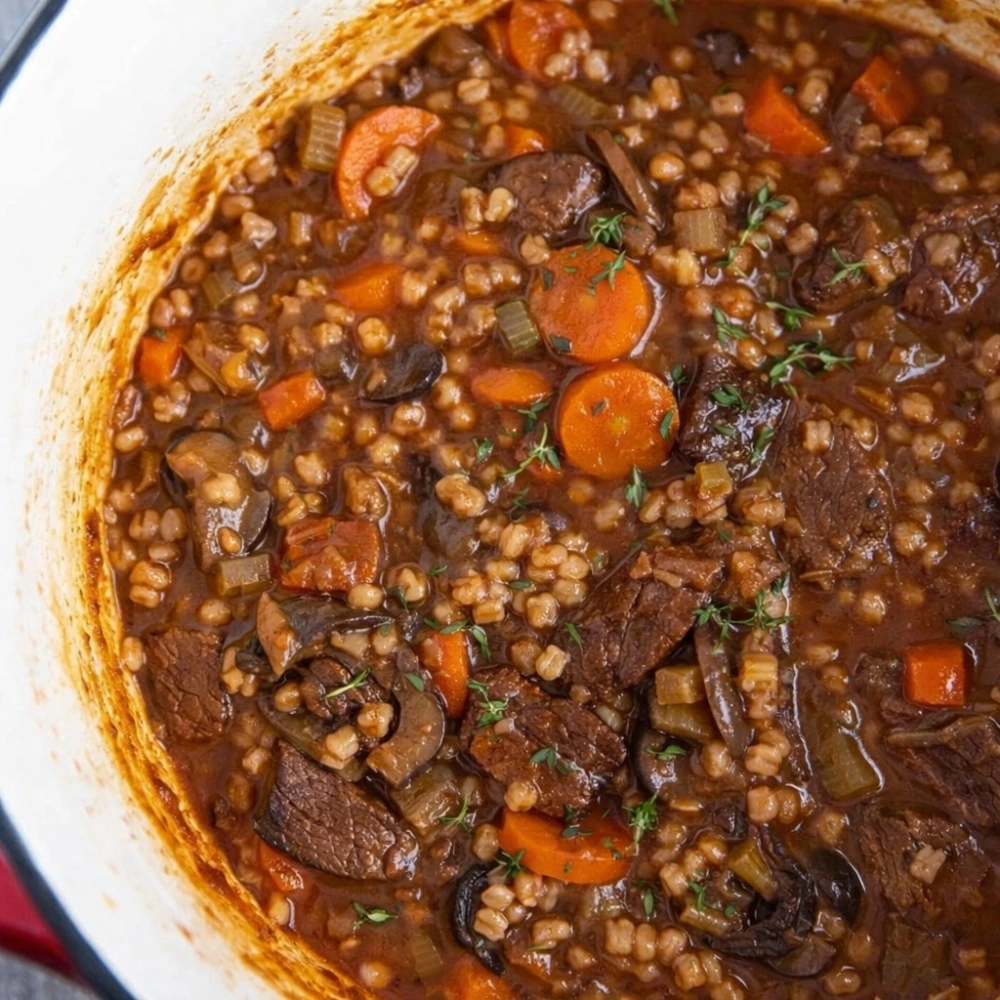
Most beef barley soups suffer from two problems: tough meat or mushy barley. The secret lies in the ‘Starch Timing’ and the ‘Collagen Breakdown.’ After years of testing this hearty beef barley soup recipe in my kitchen—including one disastrous attempt with lean round steak that resulted in rubber-like chunks—I’ve cracked the code to achieving tender, fall-apart beef and perfectly textured barley every single time.
The Science of the Perfect Stew Meat
Not all beef cuts are created equal when making soup. While pre-packaged “stew meat” seems convenient, it’s often a mixture of lean trimmings that dry out during long cooking times. Understanding marbling, connective tissue, and gelatin formation is crucial for achieving restaurant-quality results.
Chuck roast reigns supreme for beef barley soup because of its generous fat marbling and connective tissue content. As the soup simmers, that tough collagen slowly breaks down into rich gelatin, creating a silky mouthfeel and keeping the meat tender. Short ribs offer an even more luxurious option with higher collagen content, though they come at a premium price.
The key difference? Hand-cut chuck roast maintains its integrity during cooking because you control the size of the pieces. Pre-cut stew meat varies wildly in quality—some pieces cook faster than others, leading to inconsistent texture throughout your soup.
Visual comparison: When you examine pre-cut stew meat versus hand-cut chuck, you’ll immediately notice the marbling difference. Chuck roast shows white streaks of fat running through deep red meat, while generic stew meat often appears uniformly lean and darker.
Barley 101: Pearl vs. Hulled
This is where most recipes fall short. Choosing the right barley type transforms your soup from watery to wonderfully thick, or from mushy to pleasantly chewy. Let’s break down your options with precise cooking data:
| Barley Type | Cooking Time | Texture Profile | Best For… |
|---|---|---|---|
| Pearl Barley | 25-30 mins | Soft, releases starch (thickens soup naturally) | Creamy, comfort-style soups |
| Hulled Barley | 50-60 mins | Chewy, nutty, grains stay distinct | Rustic, clear broth style |
| Quick Barley | 10 mins | Very soft, can become mushy | Weeknight rushing only |
Pearl barley is the most popular choice for beef barley soup because it releases starch as it cooks, creating that signature thick, stick-to-your-ribs consistency. The processing removes the outer hull, cutting cooking time significantly.
Hulled barley (sometimes called “whole grain barley”) retains more fiber and nutrients but requires nearly double the cooking time. It produces a chewier texture with grains that remain separate rather than melting into the broth. This works beautifully for lighter, more refined versions of the soup.
Pro tip: Never use quick barley for traditional recipes. It’s been pre-cooked and will turn to mush, absorbing all your carefully crafted broth.
Step-by-Step Instructions (With “The Sear” Technique)
Step 1: The Maillard Reaction
Begin by cutting your chuck roast into 1-inch cubes and patting them completely dry with paper towels. Heat a heavy-bottomed Dutch oven over medium-high heat with two tablespoons of oil. Working in batches (never crowd the pan), sear the beef cubes on all sides until deeply browned—about 3-4 minutes per batch.
This browning isn’t just for color. The Maillard reaction creates hundreds of flavor compounds while leaving behind a dark, caramelized fond on the bottom of your pot. That fond is liquid gold for your soup’s depth.
Step 2: Deglazing
Once all beef is seared and set aside, reduce heat to medium. Add diced onions, carrots, and celery, cooking until softened (about 5 minutes). Now comes the magic: pour in half a cup of red wine or balsamic vinegar. Using a wooden spoon, scrape up all those browned bits stuck to the pot bottom. This deglazing process incorporates all that concentrated flavor directly into your soup base.
Step 3: Building the Broth
Return the seared beef to the pot along with beef broth, tomato paste, minced garlic, bay leaves, thyme, and your secret weapon—one tablespoon of soy sauce or Worcestershire sauce. This umami bomb elevates the savory depth without making the soup taste Asian or British.
Step 4: The Starch Timing
Here’s where timing matters. Bring to a boil, then reduce to a gentle simmer. Cook the beef for 1.5 hours before adding pearl barley. If you add barley too early, it absorbs too much liquid and becomes bloated. Add it too late, and your beef might be tough while your barley is perfectly cooked.
Simmer for an additional 30-40 minutes until barley is tender and beef falls apart easily with a spoon.
Cooking Method Comparison: Stove vs. Crockpot vs. Instant Pot
Different cooking methods suit different schedules. Here’s your complete conversion guide:
Stovetop (Traditional Method)
- Sear beef as described above
- Simmer beef for 1.5 hours
- Add barley, simmer 30-40 more minutes
- Total time: 2.5 hours
Slow Cooker/Crockpot
- Sear beef first (don’t skip this!)
- Transfer to slow cooker with vegetables and broth
- Cook on LOW for 6 hours
- Add barley in final hour only
- Total time: 7 hours (largely hands-off)
Instant Pot/Pressure Cooker
- Use sauté function to brown beef
- Add all ingredients EXCEPT barley
- Pressure cook on HIGH for 25 minutes
- Natural release 10 minutes
- Switch to sauté mode, add barley, simmer 15 minutes uncovered
- Total time: 1 hour
The pressure cooker delivers remarkably similar results to stovetop in a fraction of the time. The high-pressure environment breaks down connective tissue efficiently while concentrating flavors.
Troubleshooting Your Soup
“Why is my soup bland?”
Soup needs acid to brighten flavors. Add one tablespoon of lemon juice or red wine vinegar just before serving. You’ll be shocked how this simple addition makes every ingredient taste more vibrant. Also ensure you’re salting adequately—soup requires more salt than you think because you’re seasoning a large volume of liquid.
“Did my barley drink all the broth?”
Yes, this is the “Sponge Effect.” Barley continues absorbing liquid even after cooking, especially during storage. Pearl barley can absorb up to three times its volume in liquid. When reheating leftovers, add one cup of beef broth or water per quart of soup to restore the proper consistency.
“My meat is tough—what went wrong?”
You either used too lean a cut (like round or sirloin), didn’t cook it long enough, or cut pieces too large. Chuck roast needs a full 90 minutes of simmering to break down properly. Larger chunks require even more time. Consider cutting pieces smaller (3/4 inch) rather than larger if you’re concerned about cooking time.
“Can I make this ahead?”
Absolutely. Beef barley soup actually tastes better the next day as flavors meld. Store in the refrigerator for up to 4 days, or freeze for up to 3 months. Remember to add extra liquid when reheating due to barley absorption.
This beef barley soup recipe represents the intersection of traditional comfort food and modern cooking science. By understanding why each step matters—from the connective tissue in your beef choice to the starch release timing of your barley—you’ve elevated a simple soup into something truly exceptional. Whether you’re simmering this on the stove for a lazy Sunday or pressure-cooking it for a busy weeknight, you now have the knowledge to achieve perfect results every time.
About the author: After burning through three pounds of various beef cuts and two types of barley, I learned that the best cooking lessons come from understanding the “why” behind each ingredient choice. My first attempt with lean steak taught me that fat isn’t the enemy—it’s the flavor carrier.