The Best Fluffy Pancakes recipe you will fall in love with. Full of tips and tricks to help you make the best pancakes.

Focaccia Framework: From 1-Hour Quick Breads to 48-Hour Fermentation (A Master Guide)
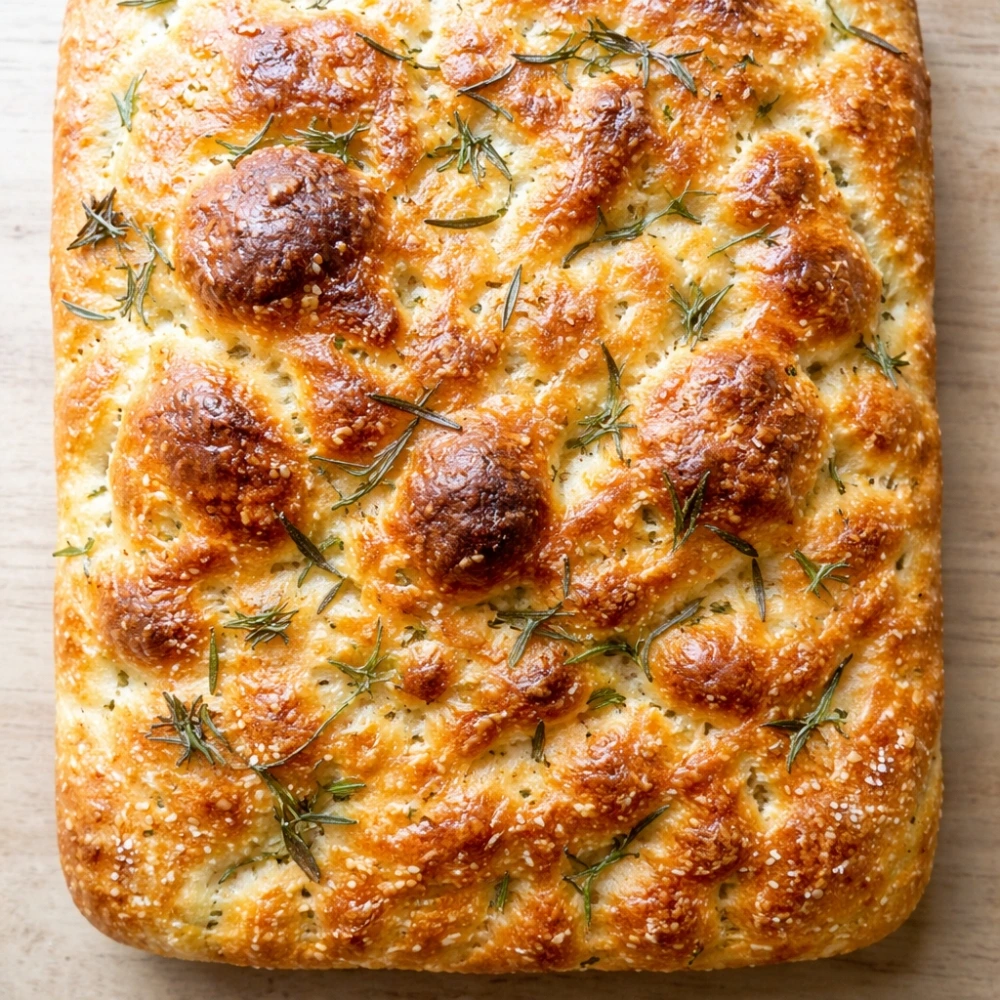
Do you have 2 hours or 2 days? Do you want fluffy or crispy? Here is the only formula that adapts to your schedule.
Perfect focaccia relies on two non-negotiable variables: high hydration (75%+) and proper dimpling technique. Unlike pizza dough, which prioritizes structure and chewiness, focaccia dough embraces a wetter consistency that creates those signature airy pockets and crispy-bottomed texture. But here’s what most recipes won’t tell you: the timeline you choose dramatically transforms your final result.
This isn’t just another focaccia recipe—it’s a complete framework that puts you in control of timing, texture, and flavor development.
The Focaccia Matrix: Choose Your Path
| Method | Rise Time | Texture Profile | Best For |
|---|---|---|---|
| Quick Method | 2 hours | Light, fluffy, mild flavor | Weeknight dinners, immediate cravings |
| Standard Method | 4-6 hours | Balanced crumb, moderate flavor | Weekend baking, dinner parties |
| Cold Ferment | 24-48 hours | Complex flavor, maximum air pockets | Meal prep, artisan-quality results |
The Science Behind Perfect Focaccia
Understanding Baker’s Percentages
Professional bakers don’t measure by cups—they calculate using baker’s percentages, where flour always equals 100%. For focaccia, the magic number is 75-80% hydration. This means for every 500g of flour, you’ll use 375-400g of water.
Why does hydration matter?
High water content creates steam during baking, which combines with the Maillard reaction (that beautiful browning process) to produce focaccia’s characteristic crispy exterior and cloud-like interior. The extra moisture also keeps the bread tender for days.
Flour Selection: The Protein Factor
- Bread Flour (12-14% protein): Creates stronger gluten networks, resulting in chewier texture with more dramatic air pockets
- All-Purpose Flour (10-12% protein): Produces softer, more tender crumb—ideal for focaccia that prioritizes fluffiness over chew
Pro Tip: A 50/50 blend gives you the best of both worlds—structure with tenderness.
Your Recipe: Three Paths to Perfection
Base Ingredients (Universal)
- 500g flour (bread, all-purpose, or blend)
- 375-400g warm water (75-80% hydration)
- 10g salt (2%)
- Extra virgin olive oil (generous amounts)
Path A: The “I Need It Tonight” Method (2 Hours)
Timeline Advantage: Same-day satisfaction
Yeast Amount: 7g instant yeast (1.4%)
Instructions
- Mix & Rest (10 minutes): Combine flour, warm water (100°F/38°C), yeast, and a pinch of sugar in a large bowl. Let foam for 5 minutes, then add salt and 2 tablespoons olive oil. Mix until shaggy.
- Stretch & Fold (30 minutes): Every 15 minutes, perform a stretch and fold (grab dough edge, stretch up, fold over). Repeat 2 times total.
- Pan Preparation (5 minutes): Coat a 9×13″ pan with 3 tablespoons olive oil. Transfer dough to pan.
- First Rise (45 minutes): Cover and let rise in a warm spot until doubled.
- Dimple & Second Rise (30 minutes): Use “piano fingers”—all fingertips together—to press dimples completely to the pan bottom. Drizzle 2 more tablespoons oil into dimples. Let rest 30 minutes.
- Bake (25 minutes): Preheat oven to 450°F (230°C). Top with flaky salt and rosemary. Bake on bottom rack until deeply golden.
Path B: The “Flavor Bomb” Cold Ferment Method (24-48 Hours)
Timeline Advantage: Maximum flavor complexity, minimal active time
Yeast Amount: 2g instant yeast (0.4%)
Instructions
- Evening Mix (Day 1): Combine flour, room-temperature water, yeast, and salt. Mix until no dry flour remains. The dough will be very sticky—this is correct.
- Bulk Fermentation (4 hours): Cover and leave at room temperature. Perform stretch and folds every hour for the first 2 hours.
- Cold Fermentation (20-44 hours): Transfer covered bowl to refrigerator. The dough will slowly develop flavor and rise.
- Recovery (2-3 hours, Day 2 or 3): Remove from fridge, coat pan with olive oil, transfer dough. Let come to room temperature, covered.
- Dimple & Final Proof (30 minutes): When dough is room temperature and relaxed, dimple assertively. Pool olive oil in each depression. Let rest.
- Bake (25-28 minutes): Bake at 450°F (230°C) until golden brown and crispy on bottom.
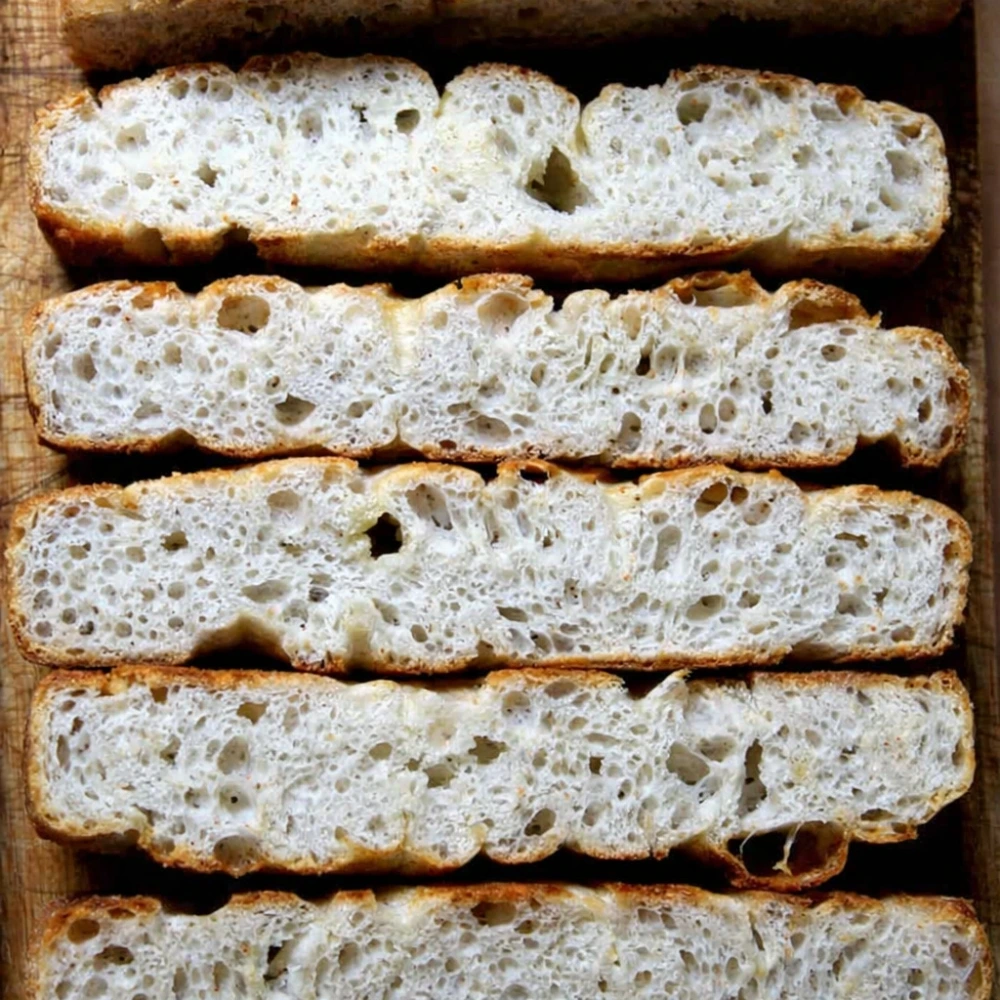
Mastering The Dimple: A Sensory Guide
The dimpling technique isn’t just aesthetic—it’s functional. Those indentations create pockets where olive oil pools, creating the focaccia’s signature crispy-tender contrast.
The Technique:
- Press all fingertips together like playing piano keys
- Push firmly down to the pan bottom (yes, all the way)
- Feel the dough’s resistance give way as bubbles redistribute
- Drizzle oil generously—it should pool in every dimple
Visual Cue: Your dimples should look like a relief map of moon craters, with oil glistening in each depression.
Troubleshooting Guide: Your Questions Answered
Q: Why is my focaccia dense instead of airy?
A: Three common culprits: (1) Low hydration—make sure you’re hitting at least 75% water-to-flour ratio; (2) Dead yeast—test your yeast by blooming in warm water with sugar; (3) Insufficient rise time—cold dough needs full room-temperature recovery.
Q: Why is my bottom soggy?
A: Two fixes: (1) More oil in the pan—focaccia needs a generous oil layer to crisp properly; (2) Rack position—always bake on the bottom third of your oven where heat is most intense.
Q: Can I freeze focaccia dough?
A: Absolutely. After the bulk fermentation (before dimpling), wrap tightly and freeze for up to 3 months. Thaw overnight in the refrigerator, then proceed with pan preparation and dimpling.
Q: My dough is too sticky to handle—help!
A: High-hydration dough should be sticky. Use wet hands or olive oil on your hands instead of flour. The wetness is what creates those air pockets.
Q: How do I know when it’s done baking?
A: Look for deep golden-brown color on top and listen—tap the bottom of the pan; you should hear a hollow sound. Internal temperature should reach 205-210°F (96-99°C).
Topping Variations: Beyond Rosemary
While classic rosemary focaccia is timeless, this framework adapts to countless variations:
- Mediterranean: Cherry tomatoes, olives, oregano
- Garlic Confit: Roasted garlic cloves, thyme, parmesan
- Caramelized Onion: Slowly cooked onions, gruyere
- Grape & Rosemary: Red grapes, rosemary, flaky salt (sweet-savory magic)
Timing Note: Add delicate toppings (fresh herbs, cheese) in the final 10 minutes of baking to prevent burning.
Storage & Reheating
Room Temperature: Store in an airtight container or wrapped in foil for 2-3 days.
Freezing: Wrap cooled focaccia tightly in plastic, then foil. Freeze up to 3 months.
Reheating: The secret to reviving day-old focaccia is moisture. Preheat oven to 350°F (175°C), lightly mist the focaccia with water, wrap in foil, and heat for 10 minutes. Remove foil and crisp for 3-5 more minutes.
Your Next Steps
The beauty of this focaccia framework is its flexibility. Start with Path A if you’re testing the waters, then graduate to Path B once you’ve experienced the flavor difference that time provides.
The difference between good focaccia and extraordinary focaccia isn’t talent—it’s understanding the relationship between hydration, time, and technique. Now you have the complete system.
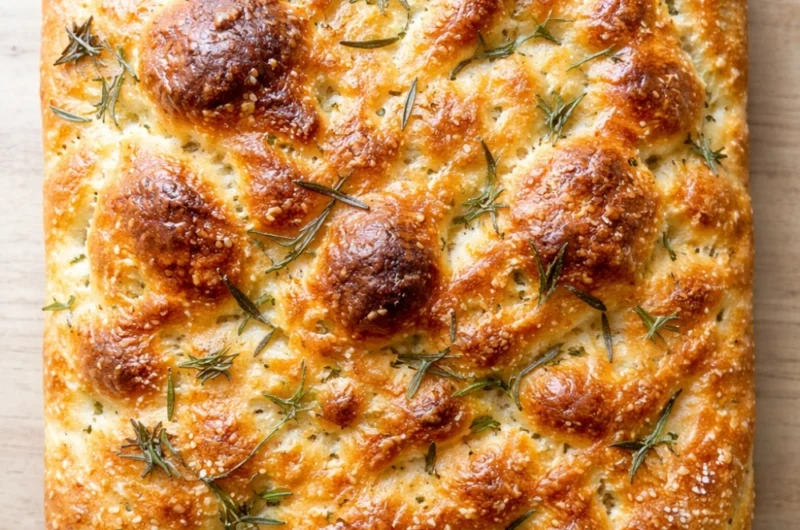
Focaccia Framework: From 1-Hour Quick Breads to 48-Hour Fermentation (A Master Guide)
Course: DessertsCuisine: ItalianServings
12
servingsPrep time
20
minutesCooking time
20
minutesCalories
220
kcalIngredients
500 g bread flour (or all-purpose flour)
400 g warm water (about 80–90°F / 27–32°C)
7 g instant yeast (about 2 tsp)
10 g fine sea salt (about 1¾ tsp)
1 tsp sugar or honey
2 Tbsp extra-virgin olive oil (for the dough)
3–4 Tbsp extra-virgin olive oil (for the pan and topping)
2 Tbsp fresh rosemary, chopped (or 2 tsp dried)
Flaky salt, to finish
Optional: 2 cloves garlic, thinly sliced; ½ cup halved cherry tomatoes or olives
Directions
- Mix dough (5 min): In a large bowl, whisk water, yeast, and sugar. Add flour and salt; mix with a spoon until no dry spots remain. Stir in 2 Tbsp olive oil. Dough will be sticky.
- First rise (60–75 min): Cover and let rise at room temp until doubled.
- Pan & second rise (30–40 min): Generously oil a 9×13 inch pan. Scrape dough into pan, oil your hands, and gently stretch to fit (rest a few minutes if it resists). Cover and let puff until slightly jiggly.
- Heat oven: Preheat to 220°C / 425°F.
- Dimple & top (5 min): Drizzle 1–2 Tbsp olive oil over dough. With oiled fingers, press deep dimples all over. Sprinkle rosemary, flaky salt, and optional garlic/tomatoes/olives.
- Bake (18–22 min): Bake until golden with crisp edges.
- Finish: Brush or drizzle 1 Tbsp olive oil over hot focaccia. Cool 10 minutes, then cut into 12 squares. Serve warm or at room temperature.