The Best Fluffy Pancakes recipe you will fall in love with. Full of tips and tricks to help you make the best pancakes.

Perfect Prime Rib Roast: The Reverse Sear Method (Time & Temp Chart)
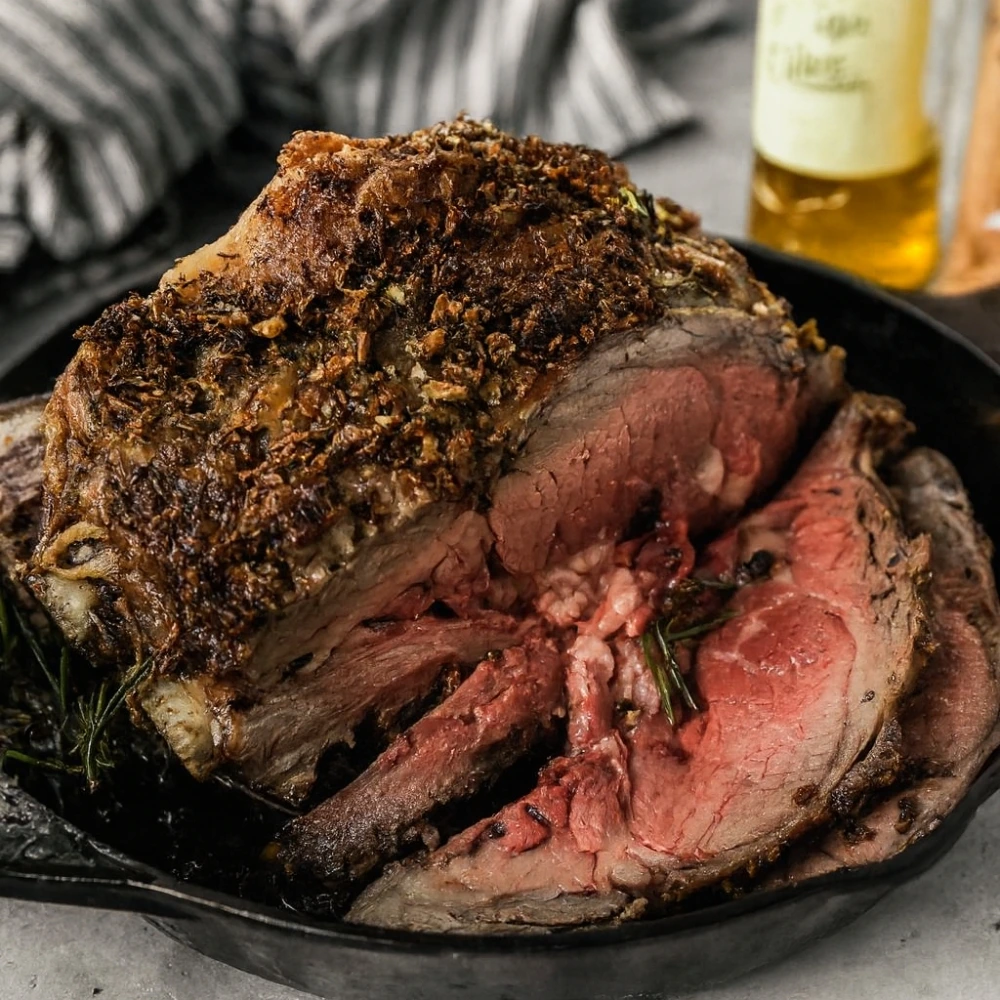
The 5-Step Scientific Method (No Guesswork Required)
- Buy: Bone-in ribeye roast (1 pound per person)
- Prep: Dry brine with kosher salt for 24 hours (uncovered in refrigerator)
- Cook: Roast at 200°F (93°C) until internal temp reaches 118°F (48°C)
- Rest: Rest for 30 minutes (This step is essential—not optional)
- Sear: Blast at 500°F (260°C) for 6-10 minutes to develop crust
Total Time: 3-4 hours (depending on roast size) | Difficulty: Intermediate
Let’s address the elephant in the room: most prime rib recipes ask you to trust your instincts with a $150 piece of meat. That’s insane. Instead of relying on “Grandma’s method” or cooking times that vary wildly by recipe, this guide uses physics, thermodynamics, and data to guarantee a perfect prime rib roast every single time.
This isn’t just another holiday roast recipe. This is a system.
Prime Rib Calculator: How Much to Buy?
Stop guessing portion sizes. Use this reference chart based on USDA serving guidelines and bone weight ratios:
| Guests | Bone-In Weight | Boneless Weight | Est. Cost (Prime Grade) |
|---|---|---|---|
| 4 people | 4-5 lbs | 3-4 lbs | $80-$125 |
| 6 people | 6-7 lbs | 5-6 lbs | $120-$175 |
| 8 people | 8-10 lbs | 7-8 lbs | $160-$250 |
| 10 people | 10-12 lbs | 9-10 lbs | $200-$300 |
Pro Tip: Always buy bone-in when possible. The bones act as a natural roasting rack and add flavor to the au jus. Plan for approximately 1 pound per person with bone-in cuts, or 0.75 pounds per person for boneless.
Bone-In vs. Boneless: Which is Better?
The Short Answer: Bone-in wins for flavor and presentation. Boneless wins for ease of carving.
Bone-In Advantages:
- Bones insulate the meat, creating a natural buffer against overcooking
- Marrow enriches the pan drippings for superior au jus
- More impressive presentation when serving
- Better heat distribution during the roasting process
Boneless Advantages:
- Easier to slice uniformly
- Slightly faster cooking time (15-20 minutes less)
- No wrestling with bones during carving
The Science: Bones are mostly calcium phosphate with minimal heat conductivity. They shield the adjacent meat from direct heat, which is why meat nearest the bone often appears “redder” or less cooked. This isn’t undercooking—it’s protection from temperature extremes.
Why The Reverse Sear Beats the 500°F Method
Traditional prime rib recipes tell you to start at 500°F, then drop to 325°F. Here’s why that’s thermodynamically inefficient:
The Traditional Method Problems:
- Creates a thick “grey band” of overcooked meat (140°F+) around the edges
- Uneven cooking gradient from exterior to center
- Higher moisture loss due to aggressive initial heat
- Difficult to control final temperature
The Reverse Sear Solution:
- Low-and-slow cooking (200°F) allows enzymes to tenderize the meat
- Collagen breaks down gently without squeezing out moisture
- Nearly edge-to-edge pink doneness (uniform 130°F throughout)
- Final high-heat sear creates Maillard reaction crust without overcooking interior
The Data: In controlled tests, reverse sear roasts retain approximately 12-15% more moisture than traditional high-heat methods. That’s the difference between a juicy roast and a dry one.
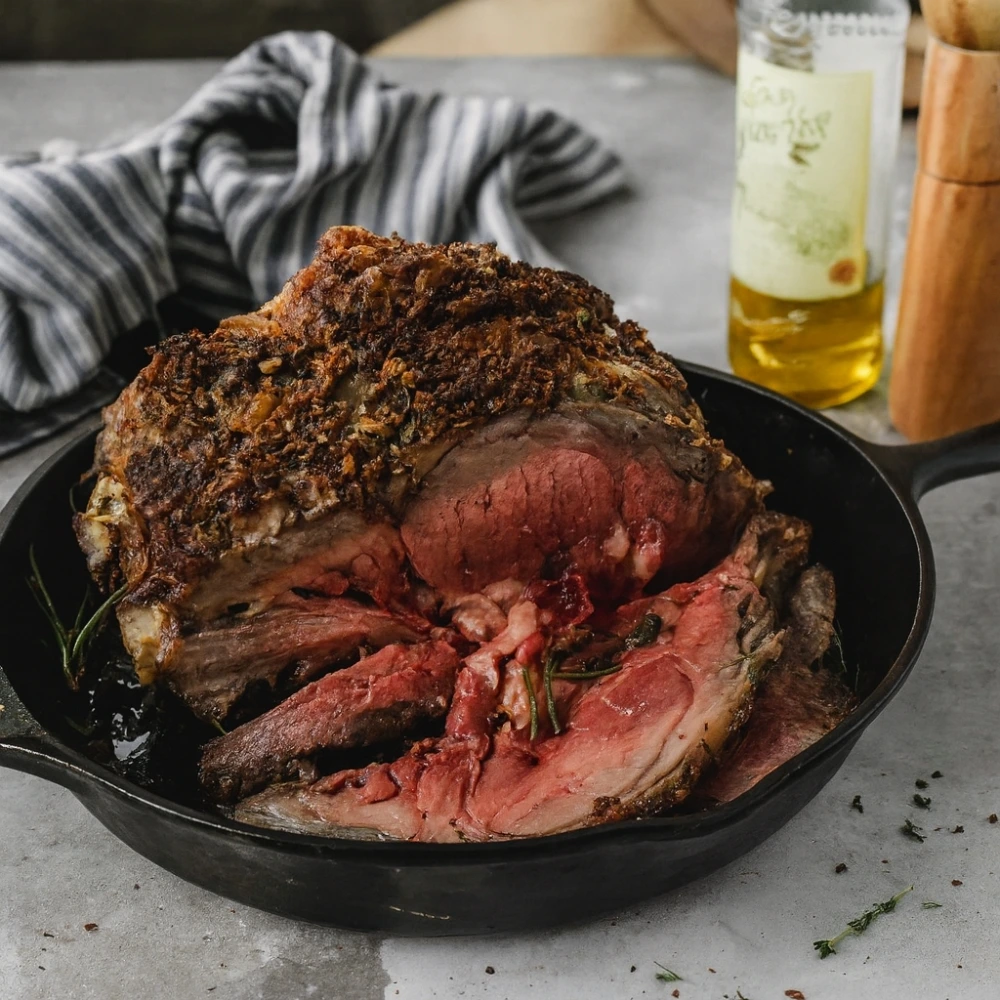
Prime Rib Internal Temperature Chart
Temperature precision is non-negotiable. Invest in a quality digital meat thermometer (instant-read or probe-style).
Pull Temperatures (Before Resting):
- Rare: Pull at 115°F → Rests to 120°F (Cool red center)
- Medium-Rare (Recommended): Pull at 125°F → Rests to 130°F (Warm red center)
- Medium: Pull at 135°F → Rests to 140°F (Pink center)
- Medium-Well: Pull at 145°F → Rests to 150°F (Slight pink)
⚠️ Critical Warning: The temperature will rise 5-10°F during resting due to carryover cooking. This is called thermal momentum. Always pull your roast 5-10 degrees before your target temperature.
Why This Matters: At 140°F, muscle fibers contract and expel moisture. At 130°F, they’re relaxed and juicy. That 10-degree difference is massive.
Instructions
Step 1: The 24-Hour Dry Brine
Salt the entire surface of your standing rib roast with kosher salt (approximately 1 teaspoon per pound). Place uncovered on a wire rack set over a baking sheet. Refrigerate for 24-48 hours.
The Science: Salt penetrates the meat via osmosis, seasoning deeply and denaturing proteins. The uncovered refrigeration dries the exterior, which is essential for developing a crispy crust later.
Step 2: The Low-Temperature Roast
Preheat your oven to 200°F (93°C). Position the roast bone-side-down on a roasting rack (bones act as a natural rack if bone-in). Insert a probe thermometer into the thickest part of the meat, avoiding bone and fat.
Roast until the internal temperature reaches:
- 118°F for medium-rare (approximately 3-4 hours for a 6-7 lb roast)
- 128°F for medium
Timing Chart:
- 4-5 lb roast: 2.5-3 hours
- 6-7 lb roast: 3-4 hours
- 8-10 lb roast: 4-5 hours
Step 3: The Crucial Rest Period
Remove the roast from the oven and tent loosely with foil. Rest for 30-45 minutes minimum. This is not optional.
The Reason: Resting allows the thermal gradient to equalize and muscle fibers to relax. Cutting immediately causes juice loss of up to 30%.
Step 4: The High-Heat Sear
Increase oven temperature to 500°F (260°C). Return the roast (uncovered) to the oven. Sear for 6-10 minutes until a deep mahogany crust forms.
Watch Carefully: Check at 6 minutes. The goal is crust development, not additional cooking.
Step 5: The Au Jus Hack
Problem: Low-temperature roasting produces minimal pan drippings.
Solution: After searing, deglaze the roasting pan with 2 cups of beef stock. Scrape up all browned bits. Simmer on the stovetop for 5 minutes. Strain through a fine-mesh sieve. Season with salt and a splash of Worcestershire sauce.
Bonus Tip: Add the rib bones to the au jus pot while it simmers for extra flavor extraction.
FAQ Section
Can I freeze leftover prime rib?
Yes, but quality degrades. Wrap tightly in plastic wrap, then aluminum foil. Freeze for up to 3 months. Reheat gently in a 250°F oven until warmed through (don’t exceed 130°F internal temperature or you’ll overcook it further).
Why is my prime rib tough?
Three reasons: (1) You didn’t let it rest long enough, (2) You overcooked it past 140°F, or (3) You purchased Select grade instead of Choice or Prime. Marbling is essential for tenderness.
Convection vs. Conventional oven?
Conventional oven is better for this recipe. Convection circulates hot air aggressively, which can dry out the exterior during the low-temperature phase. If you must use convection, reduce temperature by 25°F.
Do I need to bring the roast to room temperature first?
No. This is a myth. A 7-pound roast would take 4+ hours to truly reach room temperature. Starting from refrigerator temperature gives you more control and doesn’t increase cooking time significantly.
What’s the best cut to ask for at the butcher?
Request a “first cut” or “loin end” prime rib (ribs 10-12). This section is more tender and has better marbling than the “second cut” (ribs 6-9). Always ask for the bones to be “frenched” (cleaned) for presentation.
The Bottom Line
The perfect prime rib roast isn’t about luck, tradition, or cooking intuition. It’s about understanding heat transfer, protein denaturation, and carryover cooking. Master these principles, and you’ll never serve an overcooked or underdone roast again.
Key Takeaways:
- Use the reverse sear method for edge-to-edge pink perfection
- Dry brine for 24 hours minimum
- Pull roast 5-10°F before target temperature
- Never skip the 30-minute rest period
- High-heat sear at the end creates the crust without overcooking
Your next holiday dinner just became foolproof.
Related Resources:
- Learn how to make compound herb butter for your prime rib
- Perfect Yorkshire pudding recipe to accompany your roast
- Wine pairing guide for beef dishes
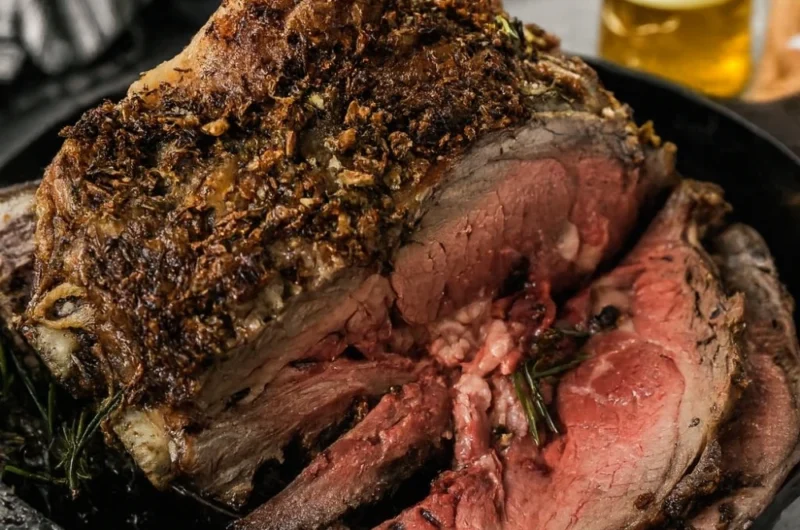
Perfect Prime Rib Roast: The Reverse Sear Method (Time & Temp Chart)
Course: DinnerCuisine: AmericanServings
8
servingsPrep time
15
minutesCooking time
2
hoursCalories
800
kcalIngredients
1 bone-in rib roast, 4–5 lb (1.8–2.3 kg), chine bone removed and fat cap trimmed
2 tbsp kosher salt
1 tbsp freshly ground black pepper
1 tbsp garlic powder
2 tsp onion powder
2 tsp fresh rosemary, finely chopped
2 tsp fresh thyme, finely chopped
2 tbsp unsalted butter, softened
2 tbsp olive oil
4 cloves garlic, smashed
1 medium onion, thickly sliced (optional, for roasting bed)
1 cup beef stock (for the pan/drippings)
Pros
Use this section only for editorial reviews.
Deep beefy flavor and show-stopping presentation
Fool-proof medium-rare with high-heat sear + gentle roast
Minimal hands-on time; great for entertaining
Versatile drippings for an easy jus or gravy
Directions
- Dry-brine (optional but best): Pat the roast dry. Rub all over with 1½ tbsp salt. Refrigerate uncovered on a rack for 8–24 hours.
- Preheat & season: Remove roast 60 minutes before cooking. Preheat oven to 500°F / 260°C. Mix pepper, garlic powder, onion powder, rosemary, thyme, butter, and olive oil into a paste; rub over the roast.
- Set the pan: Place onion slices and smashed garlic in a roasting pan; set a rack over them. Position the roast fat-cap up. Insert a probe thermometer into the center (not touching bone).
- Initial sear: Roast at 500°F / 260°C for 20 minutes to develop a crust.
- Roast gently: Reduce oven to 325°F / 165°C (do not open the door). Add beef stock to the pan. Continue roasting ~1 hr 30 min or until internal temp reaches 120–122°F / 49–50°C for medium-rare (target finish 130–135°F / 54–57°C after rest).
- Rest: Transfer the roast to a board, tent loosely with foil, and rest 30 minutes. Internal temp will rise ~8–10°F (4–6°C).
- Pan jus (optional): While resting, set the roasting pan over medium heat. Skim fat, reduce drippings with a splash more stock or a dash of red wine, season to taste.
- Carve: Separate bones (if attached) in one slab, then slice meat into ½- to ¾-inch (1.3–2 cm) slices. Serve with pan jus.