The Best Fluffy Pancakes recipe you will fall in love with. Full of tips and tricks to help you make the best pancakes.

Scone: Master Recipe & Troubleshooting Guide
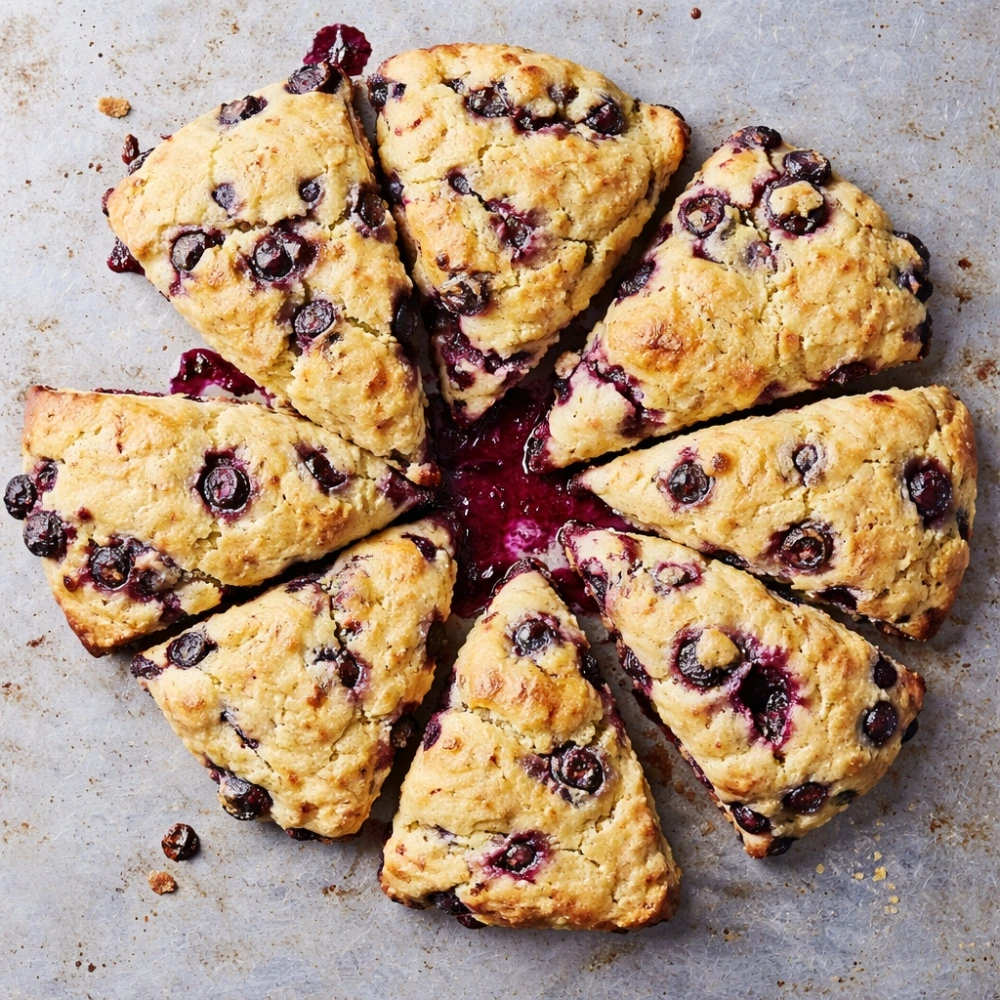
We’ve all been there: you wanted Starbucks-worthy pastries, but you baked a hockey puck. The problem isn’t you; it’s the temperature of your butter. After years of producing dense, dry disasters, I discovered that perfect scones aren’t about following a recipe—they’re about understanding the science behind chemical leavening and thermal shock.
The 3 Rules of Perfect Scones
Rule 1 (Cold): Butter must be frozen – This creates steam pockets during baking. When frozen butter hits oven heat, the water content rapidly expands, creating those coveted flaky layers through lamination.
Rule 2 (Acid): Buttermilk is non-negotiable – It activates baking soda for proper rise and adds tangy richness that balances sweetness. The acid also tenderizes gluten development for a softer crumb.
Rule 3 (Fold): Don’t knead; stack the dough – Kneading develops too much gluten, resulting in tough scones. Instead, fold and stack to create layers without overworking.
Understanding Scone Types: What Makes Them Different?
| Type | Fat Ratio | Liquid Type | Mixing Method | Resulting Texture |
|---|---|---|---|---|
| American Biscuit | 1:3 butter to flour | Buttermilk only | Cut in, minimal handling | Soft, pillowy, bread-like |
| American Scone | 1:4 butter to flour | Cream + egg | Grated butter, folded | Dense, sturdy, slightly sweet |
| British Scone | 1:5 butter to flour | Milk or cream | Rubbed in quickly | Light, cake-like, crumbly |
This comparison reveals why your scone recipe matters—the hydration percentage and fat distribution completely transform the final texture.
The Science of “Cold” (Why We Grate Frozen Butter)
Here’s where most bakers go wrong: room temperature butter. When you grate frozen butter into flour, you create tiny fat particles that remain solid until they hit oven heat. This is thermal shock in action—the rapid temperature change causes water molecules in the butter to expand into steam, literally pushing layers of dough apart.
Think of it like this: frozen butter creates a custardy center with shattering crisp edges and a tall, flaky rise. Soft butter just melts into the flour, creating a greasy, flat scone.
Pro tip: Freeze your butter for at least 2 hours, then use a box grater’s largest holes. Work quickly to prevent melting from hand heat.
Ingredients Checklist: The “Why” Behind Each Component
Flour: All-Purpose vs. Cake Flour
- All-purpose flour (10-12% protein): Creates structure with moderate gluten development
- Cake flour (7-9% protein): Produces more tender scones but less structural integrity
- My recommendation: 75% all-purpose, 25% cake flour for the perfect balance
Liquid: Why Heavy Cream AND Egg?
Heavy cream provides richness and fat content that contributes to flakiness. The egg adds binding properties and creates lift during baking. Together, they create a richer flavor profile than buttermilk alone while maintaining proper hydration percentage (around 60-65%).
Leavening: The Chemical Reaction
Baking powder provides immediate rise through carbon dioxide release. Baking soda requires acid (from buttermilk or cream of tartar) to activate. Using both creates a double-action lift—one when mixing, another when baking.
The “Stacking” Technique: Lamination Made Simple
This is the game-changer that competitors mention but don’t properly explain:
- Mix until just combined – Your dough should look shaggy and messy, not smooth
- Turn onto a floured surface – Pat into a rectangle about 1-inch thick
- Fold in thirds – Like a business letter
- Rotate 90 degrees and repeat – Do this 3-4 times total
- Final shape – Pat to 3/4-inch thickness for tall scones
This folding method creates layers without developing tough gluten strands. Each fold multiplies your layers exponentially—4 folds create 81 layers of butter and dough.
Master Scone Recipe
Prep Time: 15 minutes
Cook Time: 15-18 minutes
Total Time: 30 minutes
Yield: 8 large scones
Ingredients
- 2 cups (240g) all-purpose flour
- 1/3 cup (65g) granulated sugar
- 1 tablespoon baking powder
- 1/2 teaspoon salt
- 1/2 cup (113g) frozen butter, grated
- 1/2 cup (120ml) heavy cream
- 1 large egg
- 1 teaspoon vanilla extract
Instructions
- Preheat oven to 400°F (200°C). Line baking sheet with parchment.
- Whisk flour, sugar, baking powder, and salt in a large bowl.
- Add grated frozen butter, tossing to coat with flour.
- Whisk cream, egg, and vanilla together.
- Pour wet ingredients into dry, stirring until just combined.
- Perform the stacking technique (4 folds).
- Cut into 8 wedges or use a biscuit cutter.
- Brush tops with cream and sprinkle with coarse sugar.
- Bake 15-18 minutes until golden brown.
Troubleshooting: Why Did My Scones Fail?
If your scones are flat →
- Baking powder expired (test it: should fizz in hot water)
- Butter melted during mixing
- Oven temperature too low
If your scones are dry →
- Overmixed (gluten development creates toughness)
- Too much flour (measure by weight, not volume)
- Overbaked
If bottoms are burnt →
- Pan too dark (use light-colored baking sheets)
- Oven rack too low (middle position is ideal)
If scones spread instead of rising →
- Dough too warm before baking
- Insufficient gluten structure
- Old leavening agents
How to Make Gluten-Free Scones (That Don’t Crumble)
Replace all-purpose flour with a gluten-free blend that contains xanthan gum. The gum acts as a binder, mimicking gluten’s structural properties. Increase the egg to 2 for additional binding, and add 1 tablespoon of psyllium husk for moisture retention.
Air Fryer Scones Instructions
Preheat air fryer to 350°F. Place scones in basket without touching. Cook 10-12 minutes, checking at 8 minutes. This method produces incredibly tall scones with minimal spreading—perfect for small batches.
Freezing & Make-Ahead Science
Freeze before baking: Cut scones, freeze on a tray, then transfer to bags. Bake from frozen, adding 3-4 minutes to baking time. This actually improves texture because the butter stays colder longer.
Freeze after baking: Wrap cooled scones individually. Reheat at 350°F for 5 minutes to restore the crisp exterior.
Flavor Variations to Explore
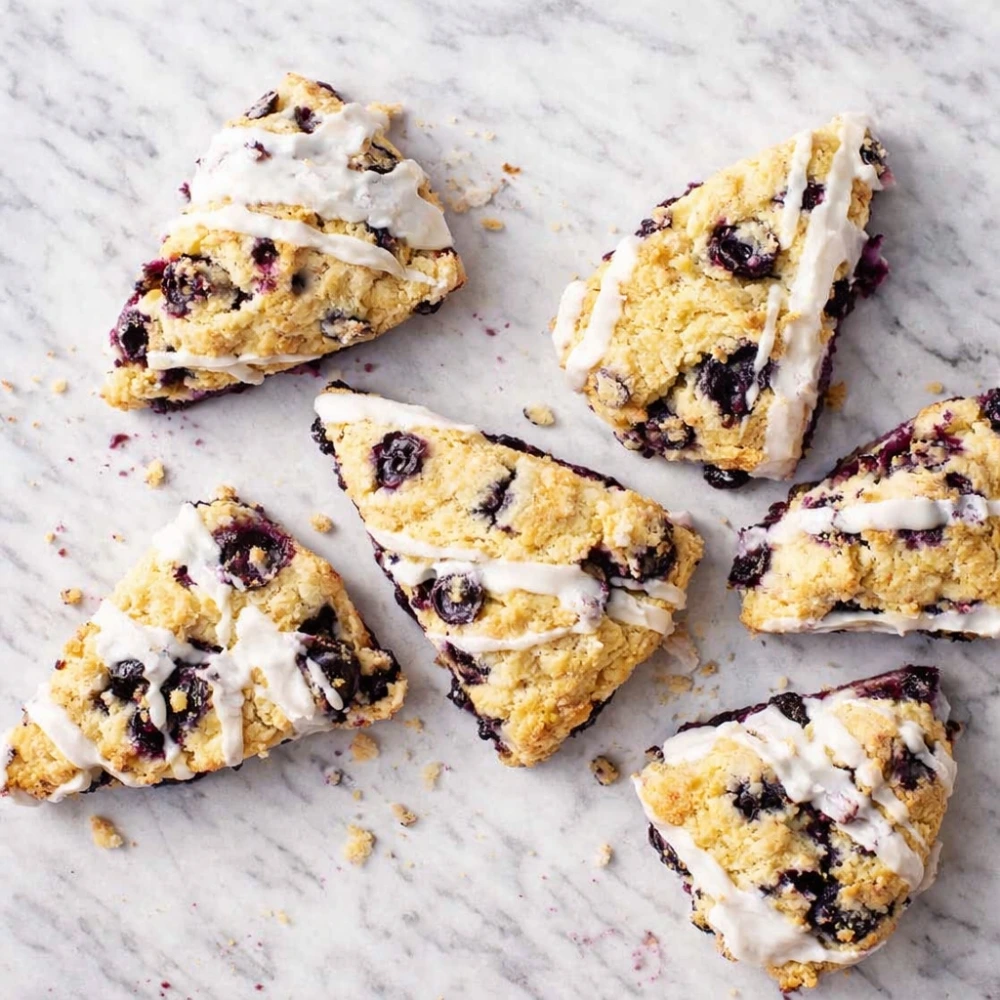
- Blueberry Lemon: Fold in 1 cup fresh blueberries and 1 tablespoon lemon zest
- Cheddar Chive: Reduce sugar to 1 tablespoon, add 1 cup sharp cheddar and 2 tablespoons fresh chives
- Earl Grey Glaze: Steep tea in warm cream, glaze cooled scones with Earl Grey icing
Frequently Asked Questions
Can I use milk instead of cream?
Yes, but your scones will be less rich and slightly less flaky. For best results, use whole milk plus 2 tablespoons of melted butter.
Why are my scones spreading?
Your dough is too warm or too wet. Chill shaped scones for 15 minutes before baking, and ensure you’re measuring flour correctly.
How do I store leftover scones?
Room temperature in an airtight container for 2 days, refrigerated for up to 5 days, or frozen for 3 months.
Perfect scones aren’t difficult—they just require understanding the science behind the ingredients. Master these three rules, and you’ll never bake another hockey puck again.
Scone: Master Recipe & Troubleshooting Guide
Course: BlogCuisine: AmericanServings
8
servingsPrep time
15
minutesCooking time
15
minutesCalories
310
kcalIngredients
2 cups (250 g) all-purpose flour
1/3 cup (65 g) granulated sugar
1 Tbsp baking powder
1/2 tsp fine salt
1/2 cup (113 g) unsalted butter, very cold, cubed
1 large egg (50 g), room temp
2/3 cup (160 ml) cold heavy cream (plus a little for brushing)
1 tsp vanilla extract
Optional: 1/2 cup (80 g) add-ins (currants, chocolate chips, or berries)
Directions
- Prep: Heat oven to 200°C/400°F. Line a baking sheet with parchment.
- Dry mix: Whisk flour, sugar, baking powder, and salt.
- Cut in butter: Rub or pulse in the cold butter until pea-sized crumbs form.
- Wet mix: In a cup, whisk egg, cream, and vanilla.
- Combine: Pour wet into dry. Fold just until clumpy; add optional mix-ins. Dough should look shaggy.
- Shape: Tip onto a lightly floured surface, pat into a 6–7 in (15–18 cm) round about 1 in (2.5 cm) thick. Cut into 8 wedges.
- Top: Place on the sheet, 2 in apart. Brush tops lightly with cream.
- Bake: 12–15 minutes until risen and golden at the edges.
- Serve: Cool 10 minutes. Split and serve warm with jam and clotted cream (or butter).