The Best Fluffy Pancakes recipe you will fall in love with. Full of tips and tricks to help you make the best pancakes.

Stop Stirring! How to Make Authentic Seafood Paella (That Actually Works)
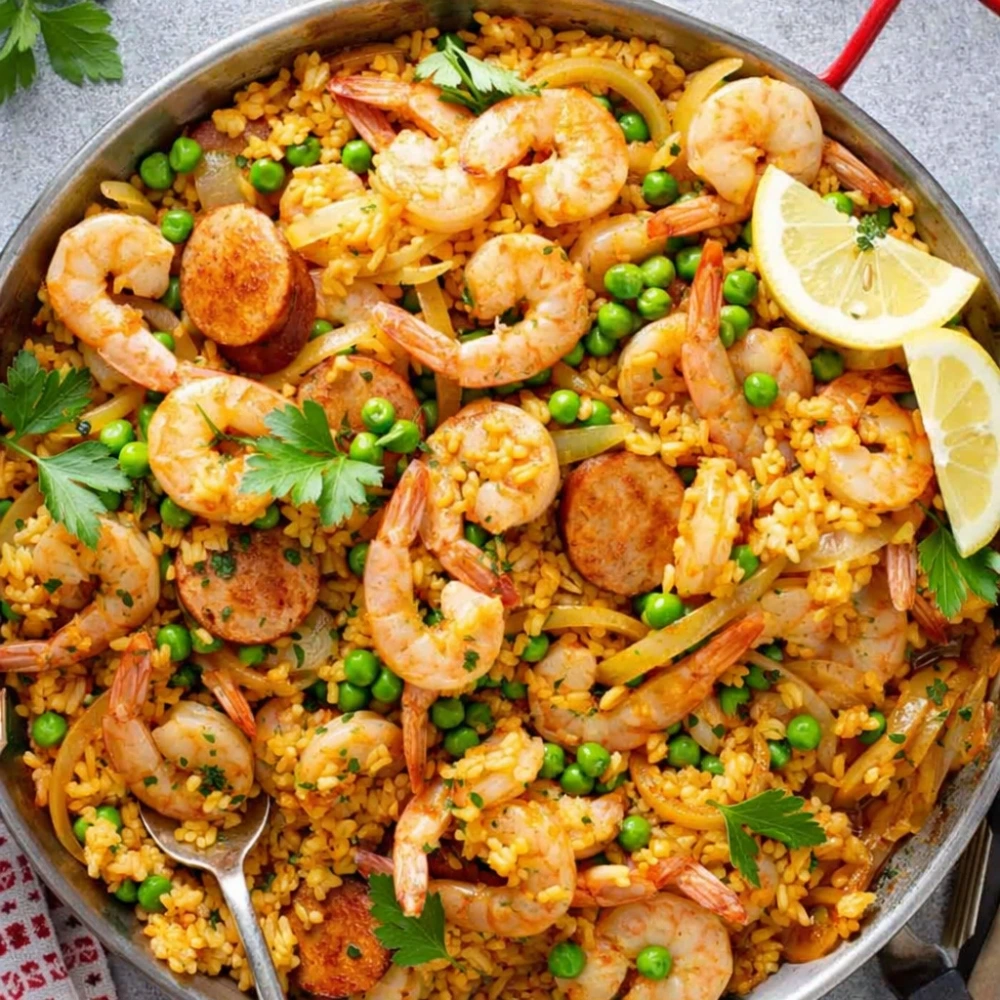
Most Paella recipes lie to you. They tell you it’s just “Spanish fried rice.” It’s not. The secret isn’t the toppings—it’s the Socarrat. Living here in Morocco, where fresh seafood is abundant but authentic Spanish ingredients can be tricky to find, I’ve adapted the traditional method to work with local ingredients without losing that authentic crunch. No pork, no fancy burner required—just science, patience, and the right technique.
What Makes Paella Truly Authentic?
What is authentic Paella? A Valencian rice dish characterized by Socarrat (crispy bottom layer) and specific saffron-infused rice that absorbs liquid without stirring.
Can you make it Halal? Absolutely. Traditional Paella Valenciana uses rabbit and chicken, while Seafood Paella (Paella de Marisco) is naturally Halal when prepared correctly. The key is avoiding Chorizo—a common “tourist trap” addition that actually masks authentic flavors.
Best Rice Substitute? If you cannot find Bomba rice in Morocco, use Calasparra or Egyptian short-grain rice. Avoid Basmati at all costs—it breaks apart and ruins the texture.
Recipe Overview
| Attribute | Details |
|---|---|
| Prep Time | 20 minutes |
| Cook Time | 40 minutes |
| Total Time | 1 hour |
| Difficulty | Moderate |
| Serves | 4-6 people |
| Key Technique | Socarrat (crispy rice layer) |
The Science of Not Stirring: Why Most Paella Fails
Here’s where most home cooks go wrong: they stir the rice.
When you stir rice during cooking, you release starch granules that create a creamy, risotto-like texture. That’s wonderful for Italian dishes, but it’s the enemy of authentic seafood paella. The magic of paella lies in the rice grains remaining separate, absorbing the saffron-infused broth from the bottom up while developing that golden, crackling Socarrat layer.
Think of it this way: paella is about patience and layers. The rice cooks in one undisturbed sheet, creating three distinct textures—fluffy on top, perfectly cooked in the middle, and caramelized at the bottom. Stirring destroys this architecture.
The Golden Rule
Once you add the rice and broth, never touch it again until serving. Let physics do the work.
Ingredients: The Morocco Adaptation Guide
Finding authentic paella ingredients in Casablanca or Marrakech can be challenging, but I’ve cracked the code. Here’s what you need and where to find it.
Essential Ingredients
For the Base:
- 400g short-grain rice (Bomba ideal, or Egyptian round rice from local markets)
- 1 liter seafood stock (homemade from shrimp shells is best)
- 0.5g saffron threads (Taliouine saffron if you can source it—Morocco’s hidden treasure)
- 4 cloves garlic, minced
- 2 ripe tomatoes, grated
- 1 red bell pepper, sliced
- 100g green beans or flat runner beans
- 90ml quality olive oil
- Sweet paprika (2 tsp) and smoked paprika (1 tsp)
For the Seafood:
- 300g large shrimp or prawns
- 200g squid, cleaned and sliced into rings
- 250g mussels or clams
- 150g firm white fish (sea bass or grouper work beautifully)
The Ingredient Localizer: Morocco-Specific Tips
Saffron: Morocco produces some of the world’s finest saffron in Taliouine. Using local saffron not only supports Moroccan farmers but adds authentic flavor at a fraction of European prices. Look for deep red threads with strong aroma.
Rice: This is crucial. Best rice for paella in Morocco can be found at:
- Marjane/Carrefour: Sometimes stock Spanish Bomba or Calasparra
- Local grain shops: Ask for Egyptian short-grain rice—it’s a surprisingly excellent paella rice substitute with high starch content
- Never use: Basmati, jasmine, or long-grain varieties
The “Halal Chorizo” Hack: Traditional recipes often call for Chorizo for smoky depth. Skip it entirely for authentic seafood paella. Instead, bloom your paprika in olive oil at the start—this creates that signature smoky undertone without meat interference. If you want more spice complexity, add a pinch of cumin and fennel seeds to your paella spice blend.
The Step-by-Step Method: Getting Perfect Socarrat
Step 1: Build Your Flavor Foundation (10 minutes)
Heat your widest pan over medium-high heat. A traditional paella pan is ideal, but a large, flat-bottomed skillet works. Add olive oil and heat until shimmering.
- Sauté the garlic for 30 seconds until fragrant
- Add grated tomatoes and cook down for 5 minutes until jammy
- Stir in both paprikas—this creates your base flavor profile
- Add bell peppers and green beans, cooking for 3 minutes
Step 2: The Critical Rice Addition (5 minutes)
Add your rice to the pan and toast it for 2 minutes, coating each grain with the oil mixture. This sealing step is essential—it prevents mushiness later.
Pour in hot seafood stock (always heated separately) at a 2.5:1 ratio to rice. Add saffron threads directly to the liquid. This is your last chance to season—taste the broth and adjust salt now, because you won’t stir again.
Step 3: The Hands-Off Phase (20 minutes)
Bring to a vigorous boil, then immediately reduce to medium-low heat. Arrange your seafood on top—shrimp, squid, mussels positioned decoratively.
Now walk away. Set a timer for 18 minutes. No stirring. No peeking. No adjusting.
Step 4: The Socarrat Sound Check (5 minutes)
Here’s the technique that separates good paella from extraordinary paella: listen to your pan.
At around the 18-minute mark, the liquid should be mostly absorbed. You’ll notice the bubbling stops. This is when magic happens. Increase heat to medium-high for 2-3 minutes.
What to listen for: When you hear a faint crackling sound—almost like Rice Krispies—you’re developing Socarrat. The bottom layer is caramelizing. It should smell nutty, not burnt.
The visual check: Tilt the pan slightly. You should see no liquid pooling. The rice on top looks fluffy and slightly dry.
Step 5: The Rest
Remove from heat immediately when you detect the Socarrat crackle. Cover with foil or a clean kitchen towel and let rest for 5 minutes. This allows steam to finish cooking any undercooked grains on top.
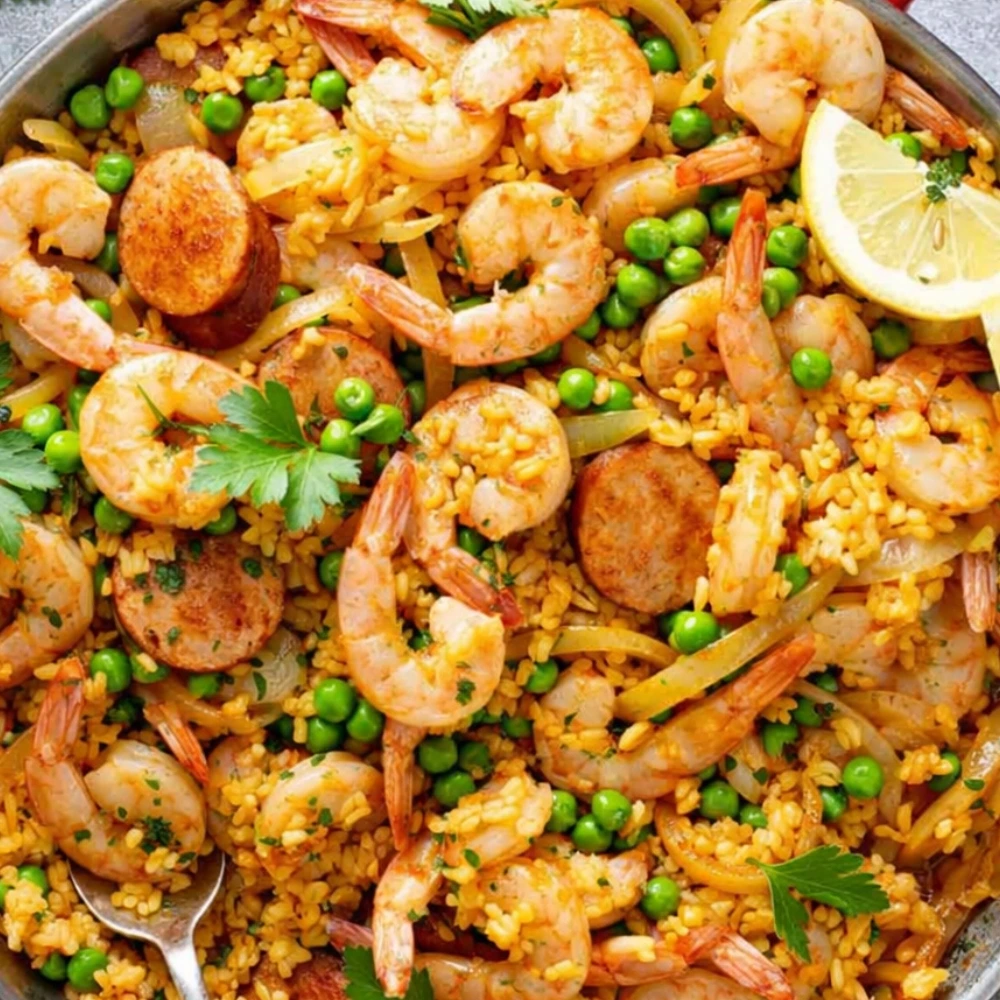
How to Get Socarrat Without a Gas Burner
Many Moroccan homes use electric or induction cooktops, which distribute heat differently than traditional gas flames. Here’s how to adapt:
For Electric Coils: Use a heat diffuser plate under your pan. This prevents hot spots and ensures even Socarrat development across the entire bottom.
For Induction: Choose a pan with a thick, flat base. Induction creates intense heat quickly—reduce your final Socarrat phase to just 90 seconds and watch carefully.
The Oven Finish Method: If you’re struggling with stovetop Socarrat, try this: After the rice absorbs liquid (18 minutes), transfer the entire pan to a 220°C oven for 5 minutes. This creates even browning without burning.
Common Mistakes & How to Avoid Them
Mistake #1: Using the wrong rice Egyptian short-grain or Calasparra are your best paella rice substitutes in Morocco. Medium-grain rice releases too much starch; long-grain rice stays hard.
Mistake #2: Too much liquid The 2.5:1 liquid-to-rice ratio is sacred. More liquid = mushy rice. Less = crunchy, undercooked disaster.
Mistake #3: Crowding the seafood Add seafood in the final 10 minutes only. Overcooking makes shrimp rubbery and squid tough.
Mistake #4: Impatience Socarrat cannot be rushed. That crackling sound is your signal—not the clock.
Serving Your Masterpiece
Traditional paella is served directly from the pan, placed in the center of the table. Provide wooden spoons and let everyone eat from their section—this communal experience is part of paella’s soul.
The Socarrat reveal: Use a wooden spoon to scrape the bottom and show off those golden, crispy pieces. These are the prize—distribute them fairly!
Accompaniments:
- Lemon wedges (essential—the acidity cuts through richness)
- Aioli (garlic mayonnaise)
- Simple green salad with vinaigrette
- Crusty bread for sopping up juices
Final Thoughts: Why This Method Works
Authentic seafood paella isn’t complicated—it’s just different from how most people approach rice cooking. By understanding the science behind Socarrat formation, adapting ingredients to what’s available in Morocco, and trusting the process without stirring, you’ll create restaurant-quality paella at home.
The beauty of this recipe is its flexibility within structure. Once you master the technique, experiment with local Moroccan seafood—cuttlefish from Essaouira, langoustines from Agadir, or sardines from Safi. The method stays the same; the flavors become your own.
Remember: great paella is about respecting the rice, trusting the heat, and listening for that golden crackle. Everything else is just decoration.
Ready to try it? Grab the best rice you can find, heat up that pan, and whatever you do—don’t stir.
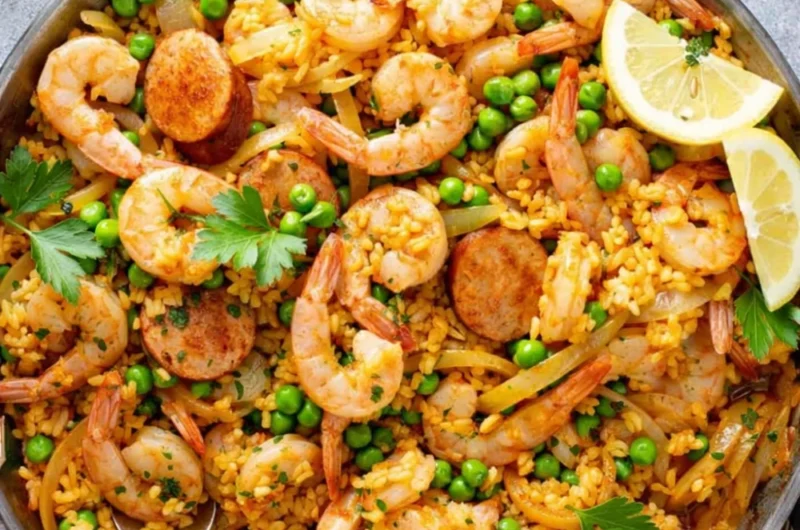
Stop Stirring! How to Make Authentic Seafood Paella (That Actually Works)
Course: Delicious Salads, LunchCuisine: SPANISHServings
6
servingsPrep time
20
minutesCooking time
40
minutesCalories
520
kcalIngredients
2 tbsp extra-virgin olive oil
300 g (10 oz) boneless chicken thighs, 3 cm pieces (optional but traditional in mixed paella)
150 g (5 oz) Spanish chorizo, sliced (optional)
250 g (9 oz) raw shrimp, peeled & deveined
500 g (1.1 lb) mussels or clams, scrubbed & debearded
200 g (7 oz) squid/calamari, rings
1 medium onion, finely chopped
1 red bell pepper, diced (plus strips for topping if you like)
3 cloves garlic, minced
2 medium tomatoes, grated or finely chopped (or 200 g crushed tomato)
2 tsp smoked paprika
1 good pinch saffron threads (about 1/2 tsp), warmed and steeped in a little hot stock
2 cups (380–400 g) bomba/calásparra rice (short-grain paella rice)
4–4½ cups (950–1065 ml) hot chicken or seafood stock (start with 4; add a splash if needed)
60 ml (1/4 cup) dry white wine (optional)
1/2 cup frozen peas
Salt & black pepper, to taste
Lemon wedges & chopped parsley, for serving
Directions
- Prep stock & saffron: Warm the stock to a gentle simmer. Lightly crush saffron and steep it in a ladle of hot stock.
- Brown meats (if using): Heat oil in a 34–38 cm (13–15 in) paella pan (or wide skillet) over medium-high. Season chicken with salt/pepper; brown 4–5 min. Add chorizo; sizzle 1–2 min. Transfer both to a plate.
- Sauté veg: In the same pan, lower to medium. Add onion and bell pepper; cook 4–5 min until soft. Stir in garlic 30 sec. Add tomatoes; cook 3–4 min until jammy. Stir in smoked paprika.
- Toast rice: Add rice; stir 1–2 min to coat in the sofrito. Pour in wine (if using); let it mostly evaporate.
- Add liquid (no more stirring): Return chicken/chorizo. Pour in hot stock (starting with 4 cups) plus the saffron infusion. Level the rice evenly. Season with 1–1½ tsp salt (adjust later). From this point, do not stir.
- Simmer & arrange: Cook at a steady simmer 15–17 min, rotating the pan for even cooking. Nestle shrimp, mussels, and squid into the rice during the last 10–12 min. Add peas in the final 5 min.
- Make the socarrat: When liquid is mostly absorbed and rice is just al dente, increase heat for 60–90 sec to gently crackle the bottom (listen for faint popping). Don’t burn.
- Rest: Remove from heat. Cover loosely with foil or a clean towel; rest 5–8 min to finish steaming.
- Finish & serve: Taste and adjust salt/pepper. Garnish with parsley and bell-pepper strips if saved. Serve with lemon wedges.