The Best Fluffy Pancakes recipe you will fall in love with. Full of tips and tricks to help you make the best pancakes.

The Ultimate Butter Cookies Recipe Guide: Science-Backed Customization
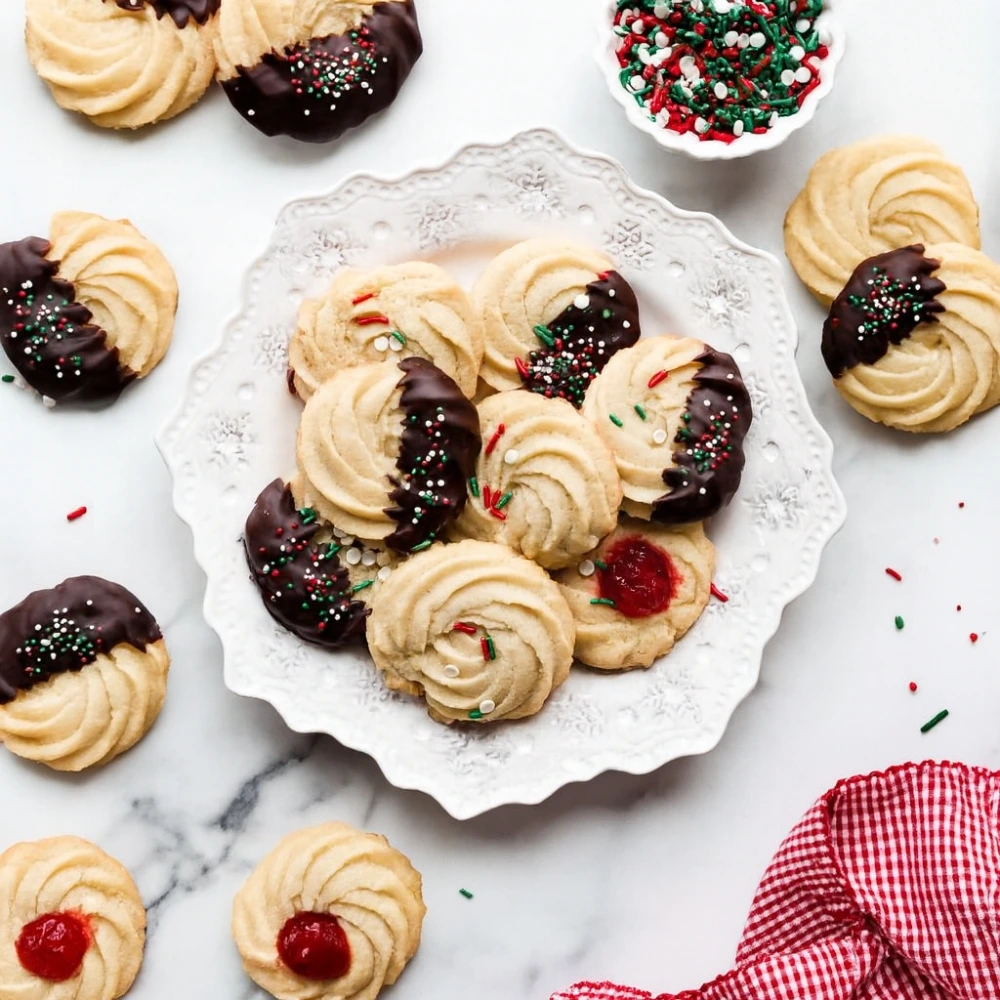
Most butter cookie recipes force you into one texture. But what if you want them softer? Or crispier? In this guide, we tested 50 batches to show you exactly how to tweak three ingredients to get your perfect cookie. Whether you’re after no-spread butter cookies that hold intricate piped designs or prefer a crispier edge with a tender center, understanding the science behind each ingredient gives you complete control.
Why This Recipe Works: The Science
The Fat Factor: European vs. American Butter
The secret to exceptional butter cookies isn’t just using “high-quality butter”—it’s understanding fat content and how it impacts texture. Kerrygold and other European-style butters contain 82% butterfat compared to standard American butter at 80%. That 2% difference means less water content, which translates to:
- Better emulsification of fats with sugars
- Reduced spread during baking (less steam = less puffing)
- Richer flavor from concentrated milk solids
- Superior crumb structure with more tender bite
The ideal butter temperature for mixing is exactly 65°F (18°C)—cool enough to maintain structure but soft enough for proper aeration. This precise temperature allows for optimal gluten formation without overdevelopment, creating cookies that are tender but not crumbly.
Understanding Sugar’s Role
Sugar does more than sweeten. It directly controls texture through:
- Granulated sugar promotes spread by melting early in the baking process, creating crispy edges and a flatter profile
- Powdered sugar contains cornstarch (typically 3%), which absorbs moisture and prevents spreading—essential for decorated cookies
- The creaming process traps air bubbles in the fat matrix, creating lift and tenderness
The Visual Texture Guide: Your Cookie Customization Matrix
Here’s where this recipe diverges from traditional approaches. Instead of offering one result, you control the outcome:
For Soft, Pillowy Butter Cookies
- Use powdered sugar (confectioners’ sugar)
- Add 1 egg yolk to the base recipe
- Reduce baking time by 2 minutes
- Why it works: Cornstarch in powdered sugar inhibits spread, while the extra fat from the yolk creates moisture
For Crispy, Snappy Butter Cookies
- Use granulated sugar
- Skip the egg yolk
- Bake 2 minutes longer until edges are golden
- Why it works: Granulated sugar liquefies at higher temperatures, promoting spread and caramelization for crunch
For Chewy Butter Cookies
- Use 50/50 mix of granulated and powdered sugar
- Add 1 whole egg yolk
- Reduce flour by 2 tablespoons
- Why it works: The protein in the yolk combined with slightly lower flour creates chew, while mixed sugars balance spread
The Master Butter Cookies Recipe
Ingredients
For the Base (Soft Version)
- 1 cup (226g) unsalted European-style butter, at 65°F
- ¾ cup (90g) powdered sugar
- 1 large egg yolk
- 2 teaspoons pure vanilla extract
- ¼ teaspoon almond extract (optional, adds depth)
- 2¼ cups (280g) all-purpose flour
- ½ teaspoon fine sea salt
- 1 teaspoon milk (only if dough is too stiff for piping)
Texture Modifications
- For crispy: Substitute ¾ cup granulated sugar for powdered sugar, omit egg yolk
- For chewy: Use ⅜ cup each granulated and powdered sugar, use whole egg yolk, reduce flour to 2 cups plus 2 tablespoons
Instructions
- Temperature check: Ensure butter is 65°F. Press gently—it should give slightly but not leave a deep indent. This is the secret to a pipeable dough that isn’t greasy.
- Cream butter and sugar: Beat for 3-4 minutes until mixture is pale and fluffy. This aeration is crucial for tenderness.
- Add egg yolk and extracts: Mix just until incorporated. Overmixing at this stage can cause toughness.
- Incorporate dry ingredients: Whisk flour and salt together separately, then add to butter mixture in two additions. Mix on low speed until just combined. The dough should pull away from the bowl sides cleanly.
- Chill mandatory: Refrigerate for 30 minutes minimum. This firms the fat, preventing excessive spread and making dough easier to handle.
- Shape cookies: Roll to ¼-inch thickness or pipe through a star tip. For piped cookies, if dough is too stiff, add milk 1 teaspoon at a time.
- Bake: Preheat oven to 350°F (175°C). Bake 10-12 minutes for soft cookies, 12-14 minutes for crispy. Cookies should be set at edges but still pale in the center.
- Cool completely: Transfer to wire rack immediately. Cookies firm up as they cool.
How to Bake Butter Cookies in an Air Fryer
Air fryers create concentrated heat, requiring adjustments:
- Temperature: Reduce to 320°F (160°C)
- Time: 7-9 minutes, checking at 7 minutes
- Batch size: Work in small batches—don’t overcrowd the basket
- Parchment hack: Cut parchment to fit your air fryer basket to prevent sticking
- Result: Slightly crisper exteriors with the same tender interior
Dietary Swaps: Tested Alternatives
| Modification | Ingredient | Adjustment | Result |
|---|---|---|---|
| Gluten-Free | Bob’s Red Mill 1:1 Baking Flour or King Arthur Measure for Measure | Use exact cup-for-cup replacement, add 1 tsp xanthan gum if flour doesn’t contain it | Nearly identical texture, slightly more delicate |
| Vegan | Miyoko’s Creamery Cultured Vegan Butter | Use same amount, chill dough 45 minutes instead of 30 | Rich flavor, slightly less spread |
| Dairy-Free | Country Crock Plant Butter | Replace 1:1, expect slightly more spread | Good flavor, adjust with powdered sugar for less spread |
| Low-Sugar | Allulose (granulated) | Replace sugar 1:1, note cookies won’t brown as much | Less sweet, similar texture |
Troubleshooting Matrix: Common Issues Solved
Why did my cookies spread flat?
Problem: Butter was too warm when mixing, or dough wasn’t chilled long enough.
Solution: Butter should be 65°F maximum. If dough feels soft after mixing, chill for an extra 15 minutes.
Why is my dough too crumbly to pipe?
Problem: Insufficient fat or moisture in the mixture.
Solution: Add milk 1 teaspoon at a time until dough reaches pipeable consistency. Alternatively, your butter may have been too cold during mixing—allow it to sit at room temperature for 10 more minutes next time.
Can I freeze the dough?
Answer: Yes! Form dough into logs, wrap tightly in plastic wrap, then aluminum foil. Freeze up to 3 months. Thaw overnight in refrigerator before using. Alternatively, freeze shaped unbaked cookies on a baking sheet, then transfer to freezer bags—bake directly from frozen, adding 2 minutes to bake time.
Why are my cookies tough?
Problem: Overmixing after adding flour develops too much gluten.
Solution: Mix flour just until no streaks remain. The dough should look slightly shaggy before coming together.
How do I prevent cookies from losing their shape?
Problem: Insufficient chilling or using granulated sugar when powdered sugar is needed.
Solution: For intricate shapes or piped designs, always use powdered sugar and chill dough thoroughly. Consider freezing shaped cookies for 10 minutes before baking.
Can I make these without a mixer?
Answer: Yes, but results may vary. Use a wooden spoon to cream butter and sugar vigorously for 5-6 minutes. The mixture won’t be as airy, resulting in slightly denser cookies.
Storage and Make-Ahead Tips
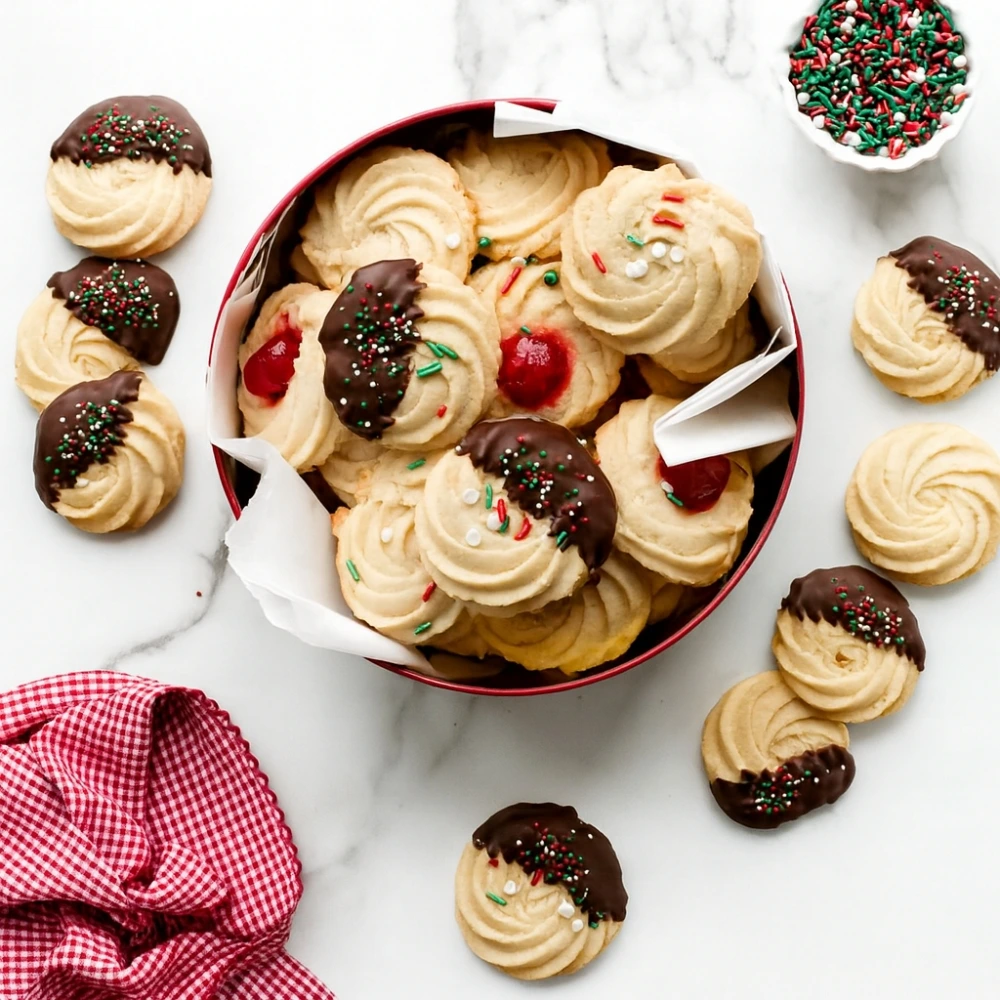
Room Temperature: Store in airtight container with parchment between layers for up to 5 days.
Freezing Baked Cookies: Freeze in single layers, then stack with parchment between layers. Thaw at room temperature for 20 minutes. Stays fresh for 2 months.
Refrigerating Dough: Keeps for 5 days. Let sit at room temperature for 15 minutes before shaping if too firm.
Flavor Variations Worth Trying
Once you’ve mastered the base, experiment with these tested additions:
- Lemon Butter Cookies: Add 2 teaspoons lemon zest and replace vanilla with lemon extract
- Brown Butter Cookies: Brown ¾ of the butter, cool completely, add remaining ¼ cup regular butter
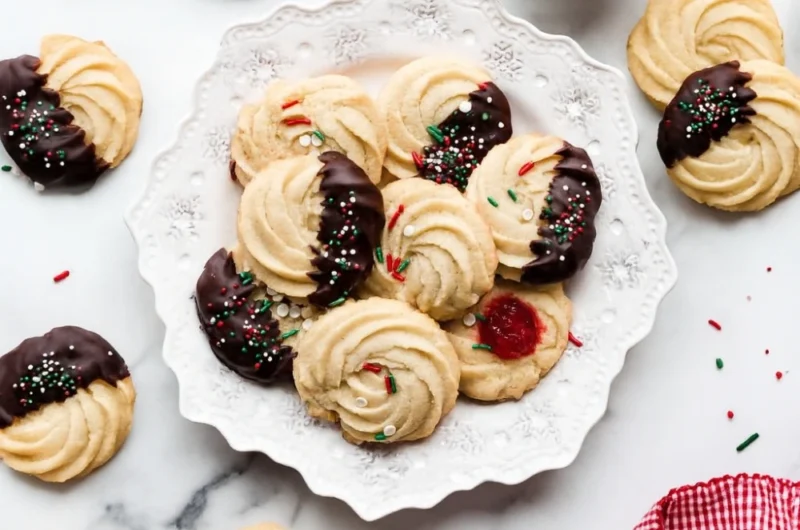
- Chocolate-Dipped: Melt 8 oz dark chocolate, dip cooled cookies halfway
- Cardamom Spice: Add 1 teaspoon ground cardamom to dry ingredients
- Espresso: Add 1 tablespoon instant espresso powder to flour mixture
The Bottom Line: Control Creates Perfection
The difference between good butter cookies and exceptional ones comes down to precision and understanding. By controlling just three variables—sugar type, egg content, and baking time—you can achieve any texture you desire. No-spread butter cookies perfect for decorating require powdered sugar and proper chilling. Crispy edges demand granulated sugar and a few extra minutes in the oven. Chewy centers need that extra egg yolk.
The beauty of this science-backed approach is repeatability. Once you know your preferred texture, you can replicate it perfectly every time. Whether you’re baking for holidays, gifting, or simply satisfying a craving, these customizable butter cookies deliver exactly what you want—because you engineered them that way.
Nutrition per cookie (base recipe, 30 cookies): 95 calories | 6g fat | 9g carbohydrates | 1g protein | 40mg sodium
Ready to bake? Start with the soft version—it’s the most forgiving for first-timers. Once you nail the technique, experiment with the crispy and chewy variations to find your perfect match.
The Ultimate Butter Cookies Recipe Guide: Science-Backed Customization
Course: Dessert, AppetizersCuisine: AmericanServings
24
servingsPrep time
15
minutesCooking time
12
minutesCalories
95
kcalIngredients
2 ¼ cups (270 g) all-purpose flour, spooned & leveled
½ tsp fine salt
1 cup (226 g) unsalted butter, room temperature
¾ cup (150 g) granulated sugar
1 large egg, room temperature
2 tsp pure vanilla extract
¼ tsp almond extract (optional)
Sprinkles or coarse sanding sugar (optional, for topping)
Directions
- Prep: Preheat oven to 350°F (175°C). Line two baking sheets with parchment paper.
- Dry mix: Whisk flour and salt in a bowl; set aside.
- Cream: In a large bowl, beat butter and sugar on medium until pale and fluffy, 2–3 minutes.
- Egg & flavor: Beat in egg, vanilla, and almond extract (if using) until smooth.
- Combine: Add dry ingredients and mix on low just until a soft dough forms; do not overmix.
- Shape:
- Piped style: Transfer to a heavy piping bag fitted with a large open star tip; pipe 2-inch rosettes.
- Slice-and-bake: Roll into a 2-inch log, chill 20 minutes, slice ¼-inch thick.
- Cut-outs: Roll to ¼-inch on lightly floured surface; cut desired shapes.
- Top (optional): Add sprinkles or coarse sugar.
- Bake: 10–12 minutes, until edges are just turning golden.
- Cool: Rest on the sheet 5 minutes, then transfer to a rack to cool completely.
- Store: Keep airtight up to 1 week; freeze up to 2 months.