The Best Fluffy Pancakes recipe you will fall in love with. Full of tips and tricks to help you make the best pancakes.

Perfect Salmon with Salsa: The Ultimate Guide (Grilled, Pan-Seared, or Baked)
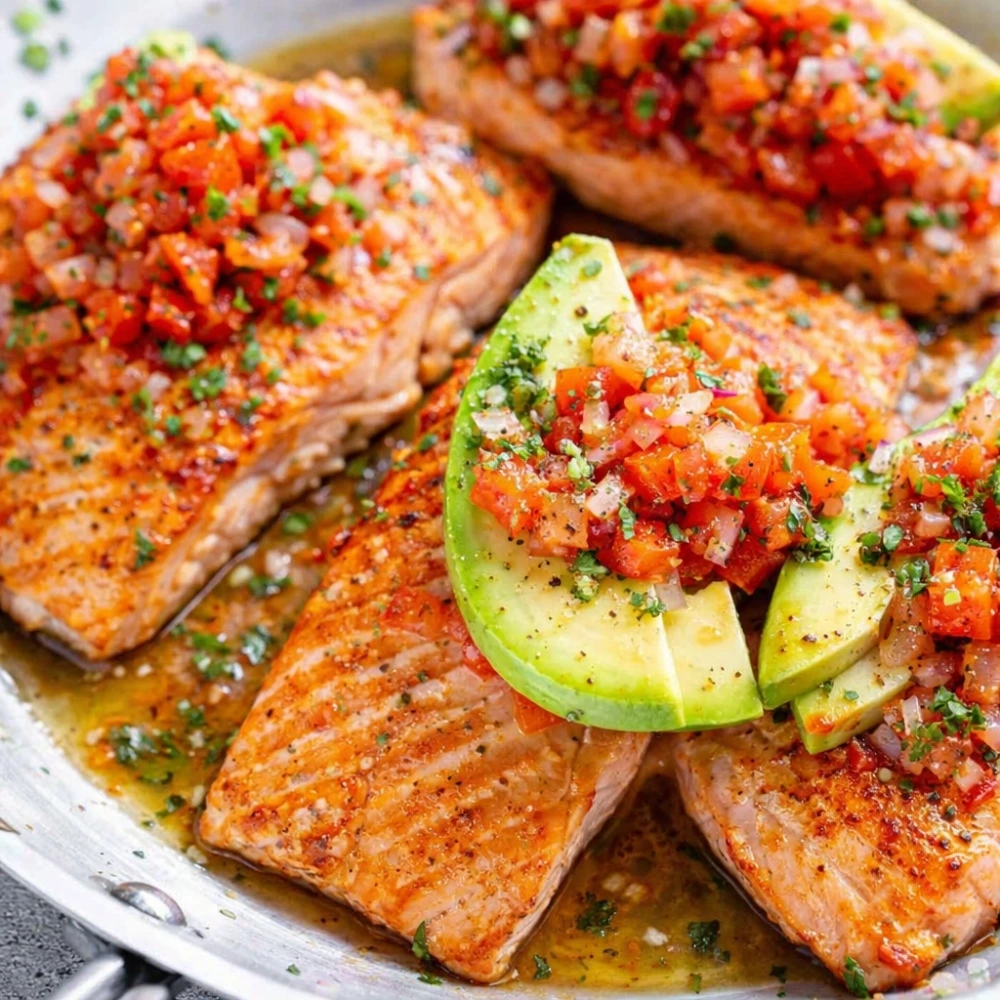
The secret to restaurant-quality salmon with salsa isn’t just fresh fish—it’s balancing the fatty acids of the salmon with the acidity of the salsa. While avocado salsa is the classic choice for creaminess, mango salsa cuts the fat, and corn salsa adds texture. Most recipes lock you into one flavor profile, but salmon is a blank canvas that deserves more creativity than just the standard cilantro-lime approach.
Here’s the truth: you don’t need to choose between sweet, spicy, or savory. With the right cooking method and salsa pairing formula, you can create restaurant-worthy salmon dishes any night of the week. Whether you’re grilling outdoors, pan-searing for crispy skin, or baking for hands-off convenience, this guide shows you exactly how to match your cooking technique with the perfect salsa companion.
The “Golden Ratio” for Salmon Salsa
Before we dive into specific recipes, let’s understand what makes a salsa truly complement salmon rather than compete with it. Every exceptional salsa needs these four components in balance:
- Acid (30-40%): Lime or lemon juice cuts through the fish’s natural oils and brightens every bite. This is non-negotiable for salmon pairings.
- Crunch (25-30%): Diced onions, bell peppers, or fresh corn provide textural contrast against the tender fish. Without crunch, your dish feels one-dimensional.
- Heat (10-15%): Jalapeños, serrano peppers, or red pepper flakes add complexity without overwhelming the delicate salmon flavor.
- Sweet (20-25%): Mango, pineapple, or even cherry tomatoes balance the heat and acid while complementing salmon’s natural sweetness.
This formula isn’t arbitrary—it’s based on how our palates process fatty fish. The acid prevents palate fatigue, the crunch creates interest, the heat stimulates, and the sweetness rounds everything out.
Choose Your Cooking Method (The Comparison)
Not all cooking methods work equally well with all salsas. Here’s your decision matrix:
| Method | Time | Best For… | Texture Score | Ideal Salsa |
|---|---|---|---|---|
| Pan Sear | 8-10 min | Crispy skin lovers | 9/10 | Chunky salsas (holds up to heat) |
| Air Fry | 7-9 min | Quick weeknight meals | 8/10 | Fresh fruit salsas (no wilting) |
| Oven Bake | 12-15 min | Hands-off cooking, meal prep | 7/10 | Any style (most forgiving) |
| Grill | 10-12 min | Smoky flavor seekers | 10/10 | Robust salsas with char elements |
The critical insight: If you want crispy skin, use the pan-sear method. If you want a hands-off healthy meal, use the oven-bake method. If you want speed, use the air-fryer. Each method changes how the salsa interacts with your fish.
According to the USDA, salmon is safe at 145°F, but for the best texture, professional chefs (and competitors like Cafe Delites) recommend pulling it at 125°F-130°F and letting it rest. This creates that restaurant-quality “medium” doneness that keeps the fish moist.
The “Big 3” Salsas (Recipe Cards)
The Classic: Avocado Lime Salsa
Why it works: The creaminess mimics a sauce without the heaviness, making it perfect for simple preparations.
Ingredients:
- 2 ripe avocados, diced
- ½ red onion, finely minced
- 1 jalapeño, seeded and diced
- Juice of 2 limes
- ¼ cup cilantro, chopped
- Salt and pepper to taste
Assembly: Combine all ingredients gently 10 minutes before serving. The lime juice will keep the avocado from browning while infusing flavor.
Pro tip: Add a tablespoon of olive oil to create a silkier texture that clings to the salmon better than a dry salsa would.
The Sweet Heat: Spicy Mango Jalapeño Salsa
Why it works: The tropical sweetness cuts through salmon’s richness while the heat keeps it interesting—perfect for summer grilling.
Ingredients:
- 2 ripe mangos, diced small
- 1 red bell pepper, diced
- 2 jalapeños, minced (keep seeds for extra heat)
- ¼ red onion, finely diced
- Juice of 1 lime
- 2 tablespoons fresh mint or cilantro
- Pinch of cayenne pepper
Assembly: Let this salsa sit for 15-20 minutes before serving so the flavors marry. The mango will release natural juices that create a light dressing effect.
Best pairing: Air-fried or grilled salmon where you want brightness to contrast the cooking method’s intensity.
The Savory: Roasted Corn & Black Bean Salsa
Why it works: This southwestern-style salsa adds protein and substance, turning salmon into a complete meal without sides.
Ingredients:
- 1 cup corn kernels (fresh or frozen, roasted)
- 1 can black beans, drained and rinsed
- 1 cup cherry tomatoes, halved
- ½ cup red onion, diced
- 1 jalapeño, minced
- Juice of 2 limes
- ¼ cup cilantro
- 1 teaspoon cumin
- Salt and pepper
Assembly: Roast the corn in a dry skillet until charred (about 5 minutes), then mix with remaining ingredients. The char adds smoky depth that complements grilled or pan-seared salmon beautifully.
Serving suggestion: This salsa is hearty enough to serve at room temperature alongside warm salmon, making it ideal for meal prep.
FAQ / Troubleshooting (The “People Also Ask” Killer)
Q: Why does my salsa make the salmon soggy?
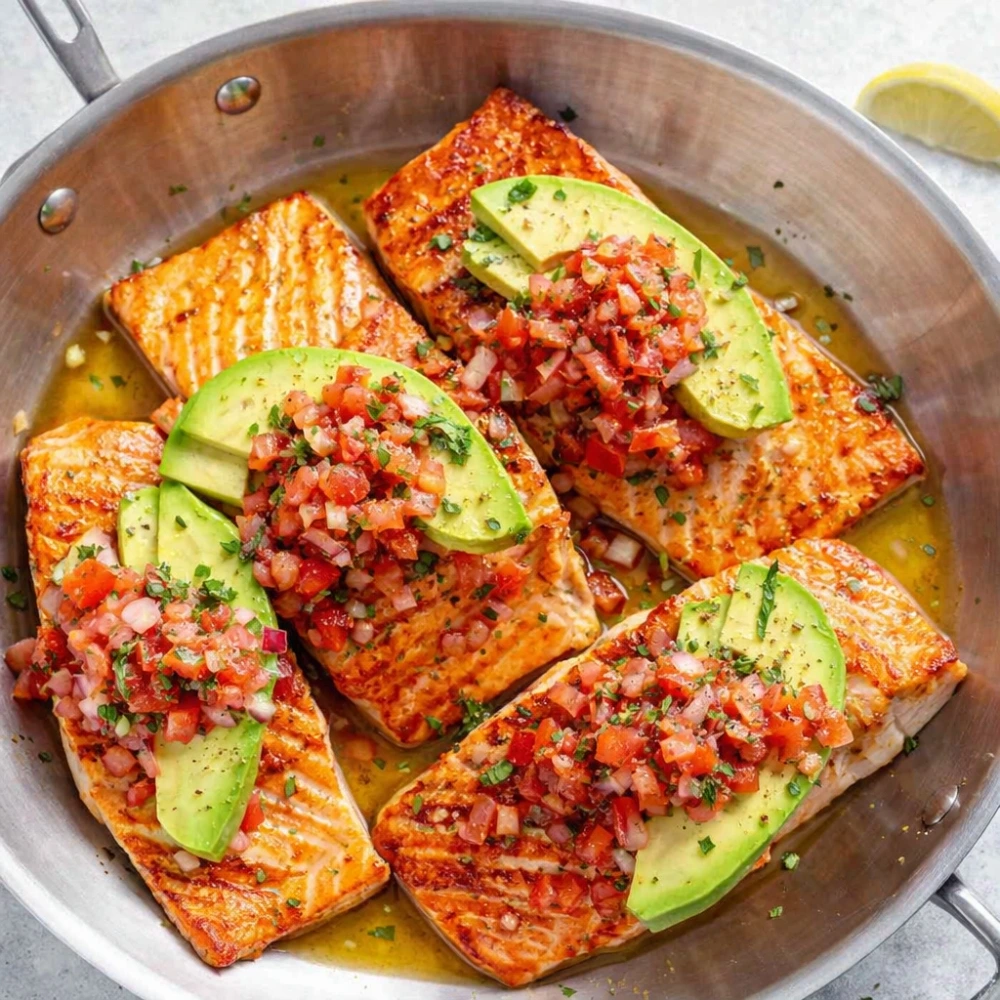
Spoon salsa on after plating, never during cooking. The moisture from fresh salsas will steam the fish and prevent crispy skin from forming. If you must cook them together, use a very chunky salsa with minimal liquid and add it only in the last 2 minutes.
Q: Can I use frozen salmon?
Absolutely. Thaw it in the refrigerator overnight for best results. Avoid using jarred tomato salsa (picante style) as the liquid will wash away the sear on the fish and create a mushy texture. Pat the salmon completely dry before cooking—this is crucial for frozen fish that retains more moisture.
Q: How long does fresh salsa last in the fridge?
Most fresh salsas last 3-4 days when stored in an airtight container. Avocado-based salsas should be consumed within 24 hours for best color and texture, though they’re still safe to eat for 2-3 days. Store with plastic wrap pressed directly onto the surface to minimize oxidation.
Q: What if I don’t like cilantro?
Replace cilantro with fresh parsley, basil, or mint depending on your salsa style. For avocado salsa, try parsley. For mango salsa, mint creates a mojito-like freshness. This substitution doesn’t change the fundamental acid-crunch-heat-sweet balance.
Q: Should I remove salmon skin before serving with salsa?
If you’ve achieved crispy skin through pan-searing, leave it on—it provides textural contrast. For baked or poached preparations where the skin doesn’t crisp, you can remove it before plating. The salsa will adhere better to skinless salmon.
The Mix-and-Match Formula: Your Salmon Salsa Decision Tree
Stop following recipes blindly. Here’s your framework:
Fatty, rich salmon (like King or Sockeye) → Needs high-acid salsas → Choose mango jalapeño or traditional pico de gallo
Lean salmon (like Coho or Pink) → Can handle creamy salsas → Choose avocado lime or add sour cream to corn salsa
Smoked or heavily seasoned salmon → Needs simple, fresh salsas → Cucumber tomato salsa or basic pico de gallo
Plain seasoned salmon → Can handle bold, complex salsas → Corn and black bean or pineapple habanero
This is the formula the restaurants don’t want you to know: the salsa should complement the salmon’s fat content and seasoning intensity, not fight against it.
Your Action Plan: Making This Work Tonight
Here’s your step-by-step approach for salmon with salsa success:
- Choose your salmon type first (see decision tree above)
- Select cooking method based on time and texture preference (see comparison table)
- Pick your salsa style to balance the fish’s richness
- Prep salsa 15-30 minutes ahead so flavors meld
- Cook salmon to 125-130°F internal temperature
- Let fish rest 3-4 minutes before plating
- Spoon salsa over salmon just before serving
The biggest mistake home cooks make isn’t the cooking—it’s the timing. By preparing your salsa while the fish rests, you ensure both components hit the plate at peak flavor and texture.
Beyond the Basics: Advanced Pairing Tips
Once you’ve mastered the fundamentals, try these elevated combinations:
Seared salmon + grilled pineapple salsa: The caramelization on both elements creates a unified flavor profile that feels sophisticated yet simple.
Baked salmon + cucumber melon salsa: This cooling combination works beautifully for summer dinners when you want something light and refreshing.
Air-fried salmon + chimichurri-style herb salsa: Swap the tomatoes and fruit for an herb-forward approach that feels more Mediterranean than Southwestern.
Remember: salmon with salsa recipes should liberate you from boring dinners, not lock you into one flavor profile. With these foundations—the golden ratio, the cooking method comparison, and the three salsa frameworks—you can improvise confidently based on what’s fresh and available.
The next time someone asks what’s for dinner, you won’t just say “salmon.” You’ll say “pan-seared salmon with roasted corn salsa,” and mean it.
Perfect Salmon with Salsa: The Ultimate Guide (Grilled, Pan-Seared, or Baked)
Course: Dinner, LunchCuisine: AmericanServings
4
servingsPrep time
10
minutesCooking time
12
minutesCalories
380
kcalIngredients
4 salmon fillets (about 170 g / 6 oz each), skin on
1 tbsp olive oil
1 tsp chili powder
½ tsp ground cumin
½ tsp garlic powder (or 1 small clove, minced)
¾ tsp fine salt
¼ tsp black pepper
1 lime, zested and juiced (divide: half for salmon, half for salsa)
Fresh Salsa
2 cups (300 g) diced ripe tomatoes (Roma or cherry)
½ small red onion, finely diced
1 small jalapeño, seeded & minced (to taste)
¼ cup (10 g) chopped fresh cilantro
1 small avocado, diced (optional)
½ tsp salt, plus more to taste
Remaining lime juice (about 1–2 tbsp)
Directions
- Heat & prep: Preheat oven to 200°C/400°F (or heat a skillet over medium-high). Pat salmon dry.
- Season: Stir olive oil, chili powder, cumin, garlic powder, salt, pepper, and half the lime zest/juice. Brush over salmon.
- Cook salmon:
- Oven: Place on lined tray, skin-side down; bake 10–12 minutes until just opaque and flakes.
- Skillet: Sear skin-side down 4–5 minutes; flip and cook 2–4 minutes more.
- Make salsa: While salmon cooks, combine tomatoes, red onion, jalapeño, cilantro, avocado (optional), salt, remaining lime juice and zest. Toss; adjust salt/heat.
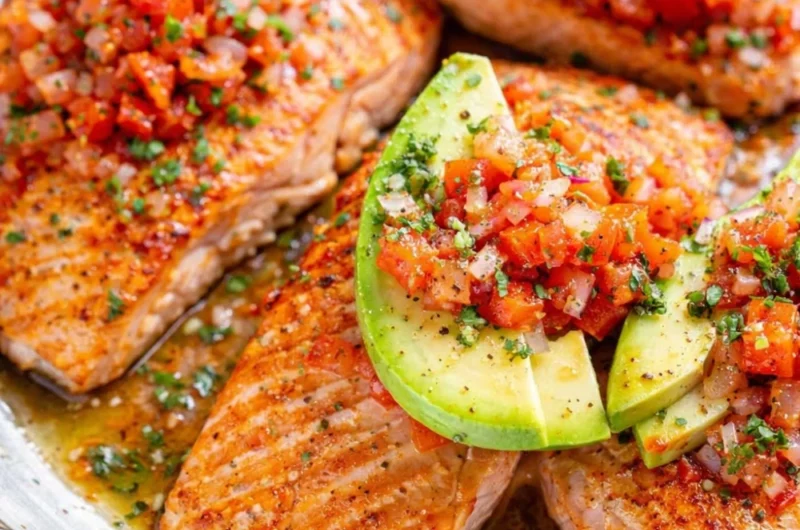
- Serve: Spoon salsa over salmon. Garnish with extra cilantro/lime wedges. Enjoy immediately.