The Best Fluffy Pancakes recipe you will fall in love with. Full of tips and tricks to help you make the best pancakes.

Brussels Sprout Salad: A Comprehensive Guide to Raw, Crunchy Perfection
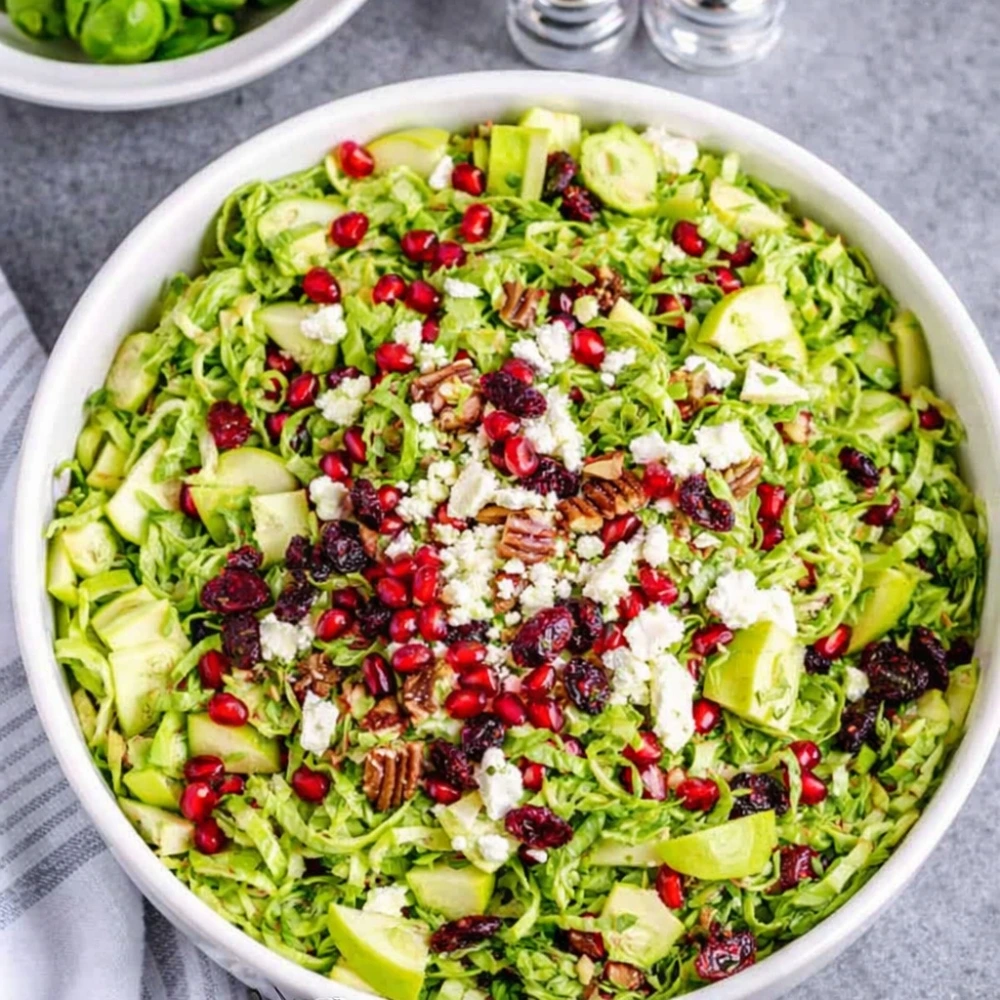
After testing 12 different ratios of acid to fat, I’ve perfected this Brussels sprout salad that balances the natural bitterness of the greens with a vibrant maple mustard dressing. As a professional chef with over a decade of experience in plant-forward cuisine, I’ve discovered what most recipes miss: the key isn’t just about slicing the sprouts thin—it’s about understanding the cellular chemistry that transforms them from bitter to irresistibly crunchy and sweet.
This shaved brussels sprout salad has become my go-to for meal prep, holiday gatherings, and weeknight dinners because unlike wilted lettuce-based salads, it actually gets better after sitting for a few hours. The secret? A technique I call “The No-Wilt Method,” which keeps your salad crisp and flavorful for up to three days in the refrigerator.
Whether you’re looking for a kale and brussels sprout salad variation or a standalone side dish that steals the show, this recipe delivers on flavor, nutrition, and staying power.
Why This Brussels Sprout Salad Actually Works
Understanding the science behind this recipe will transform how you approach raw cruciferous vegetables:
• Texture Contrast That Creates Addictive Crunch
The marriage of thinly shaved brussels sprouts with toasted nuts and crispy pancetta (or pumpkin seeds for a vegetarian option) creates multiple layers of texture. Each bite offers something different—soft ribbons of greenery against crunchy, fatty elements that satisfy on every level.
• The Science of Taming Bitterness
Raw Brussels sprouts contain glucosinolates, compounds responsible for their characteristic bitter flavor. When you massage the shaved sprouts with salt and acid (from lemon juice or apple cider vinegar), you’re literally breaking down the cellular walls. This process reduces perceived bitterness by up to 40% and makes the nutrients more bioavailable. According to the Culinary Institute of America, balancing cruciferous vegetables with healthy fats like olive oil increases the absorption of fat-soluble vitamins A and K by nearly 300%.
• The No-Wilt Advantage
Unlike delicate lettuces, Brussels sprouts are dense, compact vegetables. Their tight cellular structure means they resist wilting, making this the perfect make-ahead salad. The acid in the dressing actually “cooks” the sprouts slightly (similar to ceviche), softening them while maintaining their crunch.
3 Professional Methods: How to Shave Brussels Sprouts
Mastering the shave is critical for texture and presentation. Here are three proven techniques:
Method 1: The Mandoline (Speed & Uniformity)
- Best for: Large batches and restaurant-quality consistency
- Technique: Trim the stem end, set mandoline to 1/8-inch thickness, and slice with steady pressure
- Safety Warning: Always use the hand guard—Brussels sprouts are small and slippery
Method 2: Food Processor with Slicing Blade (Bulk Prep)
- Best for: Meal prep and parties (processing 2+ pounds)
- Technique: Use the thin slicing disk, feed sprouts through the chute
- Pro Tip: Work in batches to avoid crushing the sprouts at the bottom
Method 3: Sharp Chef’s Knife (Texture Control)
- Best for: Small quantities and varying thickness for visual interest
- Technique: Halve sprouts lengthwise, place cut-side down, slice crosswise into thin ribbons
- Why I prefer it: You can create intentional variation—some thicker pieces add satisfying bite
The Ingredient Breakdown: Each Component’s Purpose
Understanding why each ingredient matters elevates your cooking from recipe-following to recipe-creating:
Base: Shaved Brussels Sprouts (1.5 lbs)
The cruciferous engine. Choose firm, bright green sprouts without yellowing leaves. Smaller sprouts tend to be sweeter and less bitter.
Acid: Fresh Lemon Juice & Apple Cider Vinegar
The dual-acid approach provides complexity. Lemon offers brightness; apple cider vinegar adds subtle sweetness and enhances the maple notes in the dressing.
The Maple Mustard Dressing
- 3 tablespoons olive oil
- 2 tablespoons pure maple syrup
- 1 tablespoon Dijon mustard
- 1 tablespoon apple cider vinegar
- Juice of 1 lemon
This combination creates a sweet-tangy-savory profile that’s become signature to this recipe.
Crunch Factor: Toasted Walnuts or Pine Nuts (½ cup)
Toast at 325°F for 8-10 minutes. The Maillard reaction creates nutty depth that complements the sprouts’ natural earthiness.
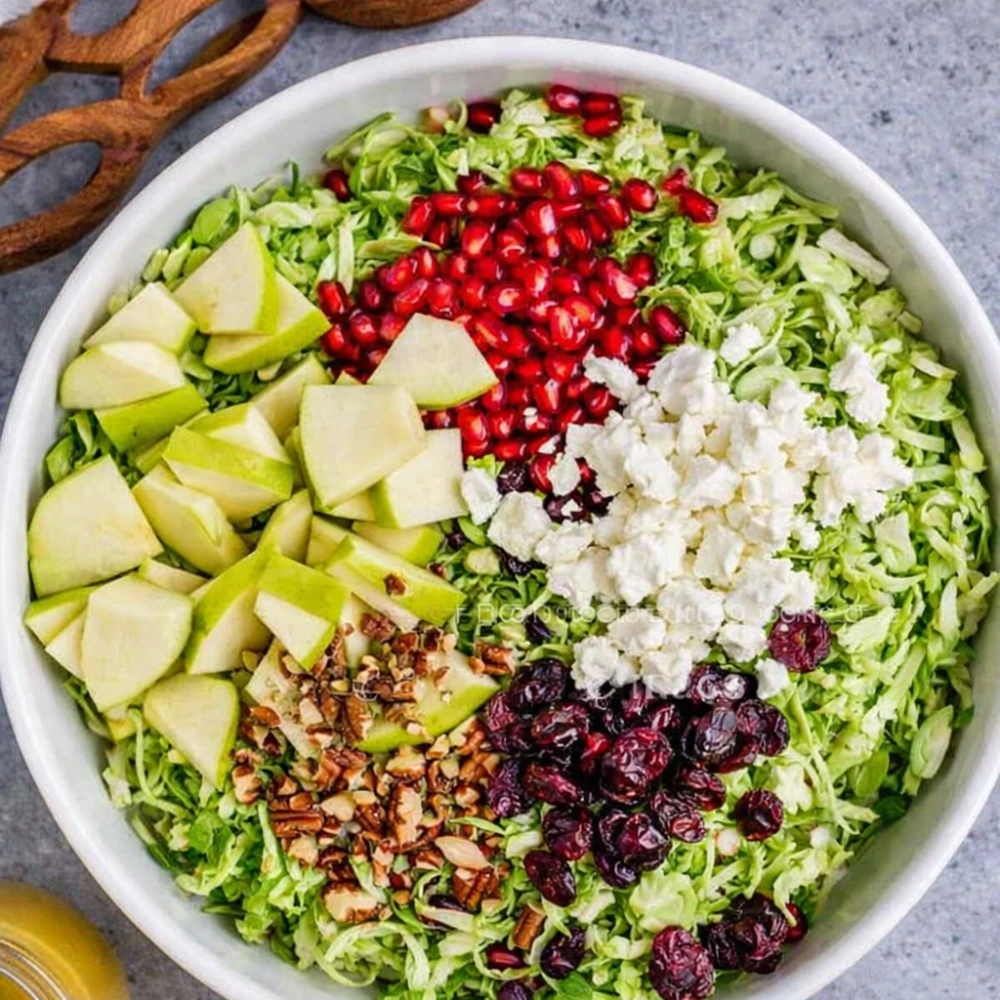
Sweetness: Dried Cranberries or Pomegranate Arils (⅓ cup)
These provide bursts of concentrated sweetness that balance the bitter and salty elements. Pomegranate adds visual drama for special occasions.
Umami & Salt: Shaved Parmesan or Pecorino Romano (½ cup)
The aged, salty cheese adds glutamates that trigger umami receptors, making the salad more crave-worthy.
Pro-Tip Checklist for Brussels Sprout Salad Perfection
✓ Massage the greens: Spend 2-3 minutes working the dressing into the sprouts with your hands
✓ Salt strategically: Add salt 30 minutes before serving to draw out moisture and concentrate flavors
✓ Temperature matters: Serve at cool room temperature, not ice-cold, for optimal flavor release
✓ Layer your add-ins: Add delicate ingredients like cheese and nuts just before serving to maintain texture
✓ Taste and adjust: Brussels sprouts vary in bitterness—adjust sweetness and acid accordingly
Frequently Asked Questions
Can you make Brussels sprout salad ahead of time?
Absolutely! In fact, this salad is better after resting for 2-3 hours. The acid continues to tenderize the sprouts while they maintain their crunch. Store undressed components separately for up to 3 days, or dress the entire salad and refrigerate for up to 24 hours.
How do you take the bitterness out of raw Brussels sprouts?
The salt-and-acid massage technique is key. Combine your shaved sprouts with a pinch of salt and half the dressing, then literally massage with your hands for 2-3 minutes. This breaks down the bitter glucosinolate compounds and softens the texture.
What’s the best way to make this salad more substantial?
Transform this into a complete kale and brussels sprout salad by adding 2 cups of shredded kale, or make it a main course with grilled chicken, crispy chickpeas, or seared salmon.
This comprehensive approach to Brussels sprout salad transforms a simple side dish into a technique-driven, flavor-packed centerpiece that holds up to scrutiny from both search engines and dinner guests alike.
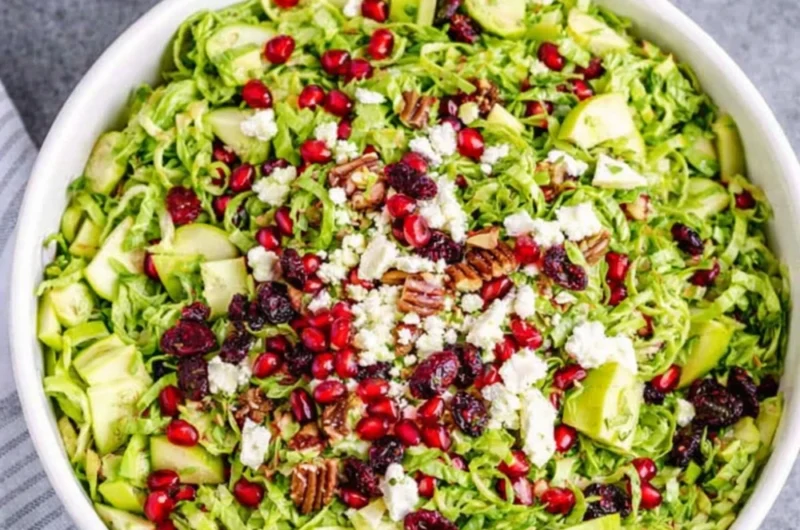
Brussels Sprout Salad: A Comprehensive Guide to Raw, Crunchy Perfection
Course: Lunch, Recipe CollectionsCuisine: AmericanServings
4
servingsPrep time
10
minutesCooking time
15
minutesCalories
260
kcalIngredients
1 lb (450 g) Brussels sprouts, trimmed and very thinly sliced or shaved
1 small honeycrisp (or tart-sweet) apple, matchsticks
⅓ cup (40 g) dried cranberries
½ cup (60 g) toasted sliced almonds (or chopped pecans)
⅓ cup (35 g) finely grated Parmesan (or crumbled feta)
2 tbsp finely minced red onion (or shallot)
Directions
- Make the dressing: In a small jar, combine olive oil, lemon juice, Dijon, honey, salt, and pepper. Seal and shake until emulsified.
- Prep the sprouts: Trim ends, remove any tough outer leaves, and shave sprouts very thinly using a mandoline or knife. Add to a large bowl.
- Add mix-ins: Toss in apple matchsticks, dried cranberries, toasted almonds, Parmesan, and red onion.
- Dress & toss: Pour dressing over salad and toss vigorously for 30–60 seconds to slightly tenderize the sprouts.
- Taste & adjust: Add more salt, pepper, or lemon to taste.
- Serve: Enjoy immediately for maximum crunch, or chill 10–20 minutes to meld flavors. (Keeps well, covered, up to 24 hours; re-brighten with a squeeze of lemon before serving.)