The Best Fluffy Pancakes recipe you will fall in love with. Full of tips and tricks to help you make the best pancakes.

No-Knead Artisan Bread: A Science-Backed, Fail-Proof Guide
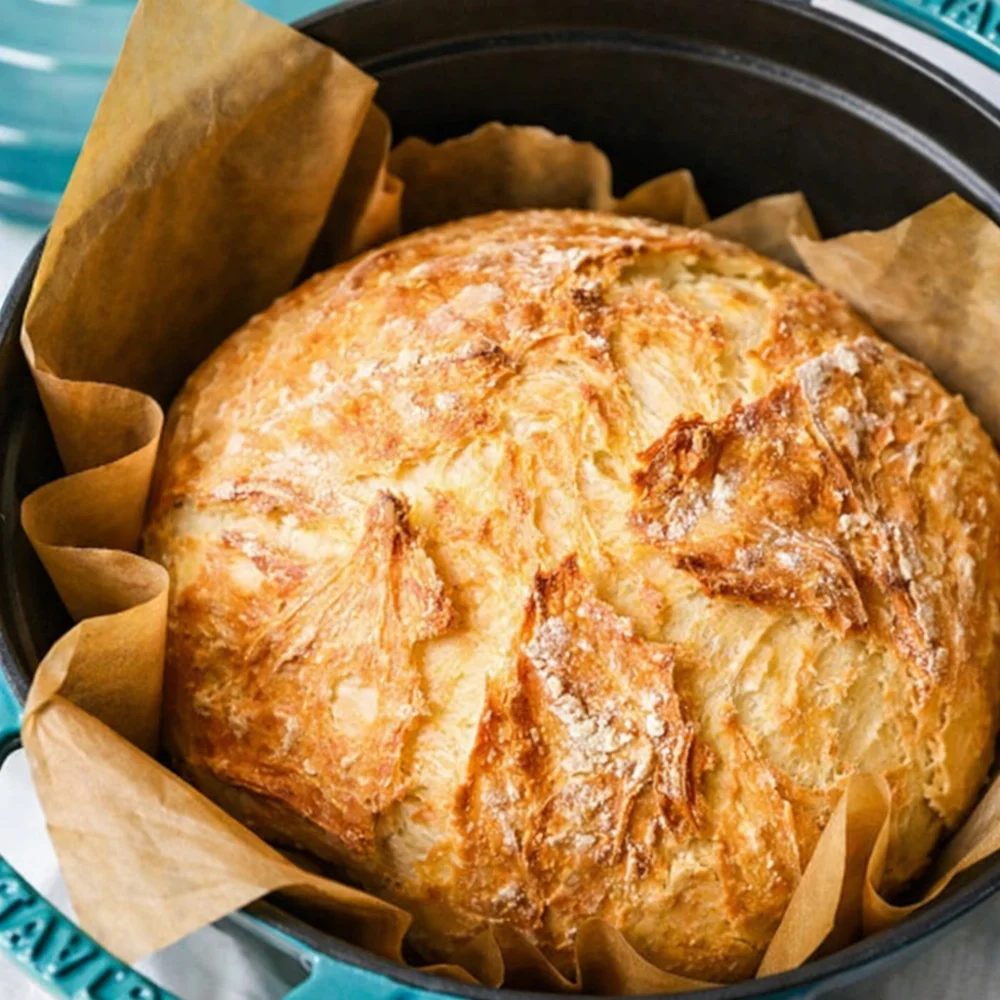
Artisan bread is defined by a crackly crust, open crumb, and slow fermentation that develops flavor naturally. This no-knead artisan bread relies on a precise 72% hydration rule, time-driven gluten development, and steam-assisted baking to create bakery-quality results at home. Unlike standard bread recipes, this method minimizes hands-on work while maximizing structure and flavor through fermentation science.
What Defines “Artisan” Bread?
Artisan bread is not about fancy shaping or expensive tools. It is about process over speed. True artisan bread uses long fermentation, minimal yeast, and high hydration to allow gluten to form naturally.
Key characteristics include:
- Open, irregular crumb
- Dark, blistered crust from the Maillard reaction
- Mild tang from slow fermentation
- Simple ingredient list with precise ratios
This is why no-knead methods work so well: time replaces mechanical kneading.
No-Knead Artisan Bread vs Standard Bread
| Feature | No-Knead Artisan Bread | Standard Sandwich Bread |
|---|---|---|
| Crust | Thick, crackly | Soft, thin |
| Crumb | Open, airy | Tight and uniform |
| Hands-On Time | 5 minutes | 25–30 minutes |
| Fermentation | Long (12–24 hrs) | Short (1–2 hrs) |
| Equipment | Dutch oven or steam | Loaf pan |
This comparison explains why no-knead artisan bread delivers superior texture with less effort.
The 4-Ingredient Foundation (The Logic)
Flour, Water, Salt, Yeast: The Ratios
- Bread flour: 500g
- Water: 360g (72% hydration)
- Salt: 10g
- Instant yeast: 2g
Higher hydration allows gluten strands to align naturally through autolyse, creating strength without kneading. Salt controls yeast activity and strengthens gluten. Minimal yeast ensures flavor develops slowly rather than tasting flat.
Step-by-Step No-Knead Artisan Bread Method
- Mix the dough by combining flour, water, yeast, and salt until shaggy.
- Rest (autolyse) for 12–18 hours at room temperature. This allows gluten to form naturally.
- Shape gently by folding the dough over itself without degassing.
- Proof briefly for 45–60 minutes.
- Bake with steam in a preheated Dutch oven at 475°F.
Steam delays crust formation, allowing maximum oven spring.
Bread Science Troubleshooting (Why It Failed)
| Problem | Likely Cause | Fix |
|---|---|---|
| Flat loaf | Over-proofing | Shorten final rise |
| Dense crumb | Low hydration | Increase water by 2–3% |
| Pale crust | Lack of steam | Preheat Dutch oven longer |
| Tough crust | Overbaking | Reduce bake time by 5 minutes |
Understanding these variables is what separates successful no-knead artisan bread from disappointing loaves.
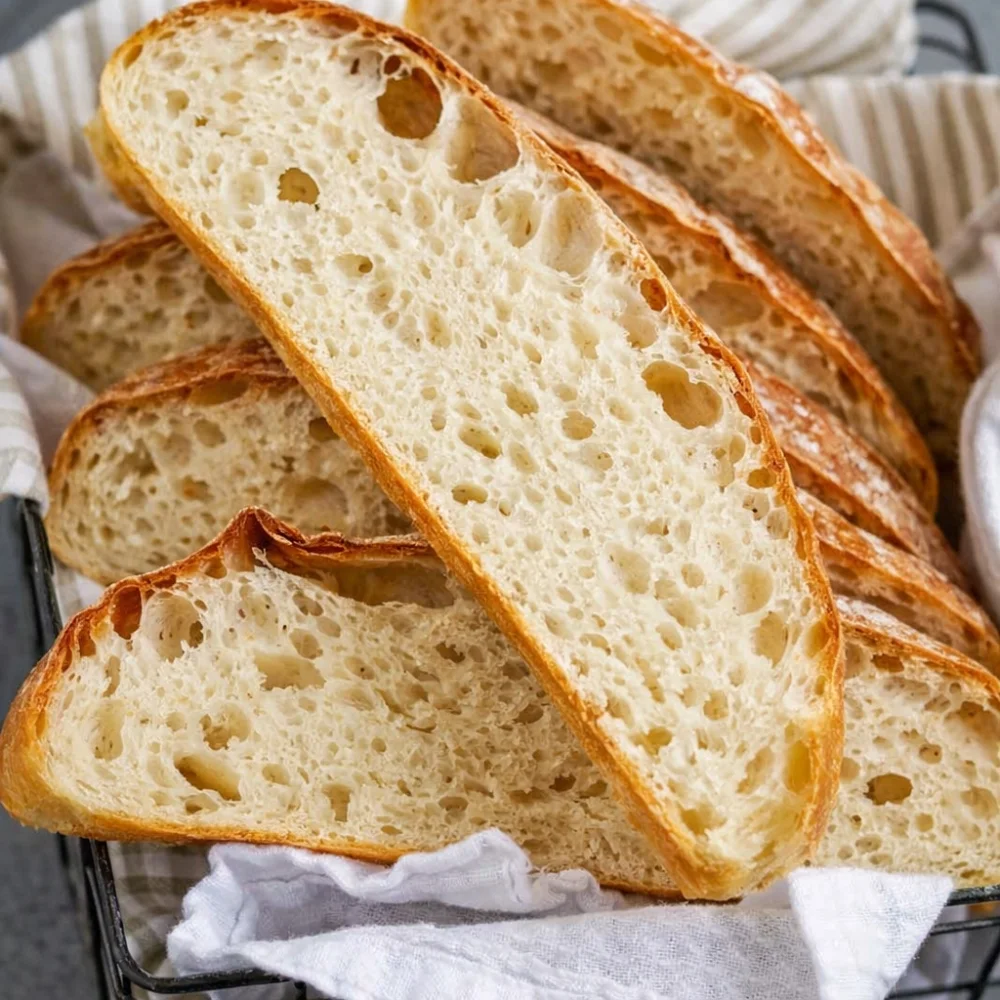
Advanced Techniques: Scoring and Steam
Scoring controls expansion and prevents blowouts. Use shallow, confident cuts at a 30-degree angle. Steam is critical during the first 15 minutes of baking, keeping the crust elastic so the loaf can expand fully.
Note from a Baker:
“Steam is the single most important variable in artisan bread baking. Without it, even perfect dough will underperform.” — Professional Bread Instructor
Can You Make Artisan Bread Without a Dutch Oven?
Yes. Bake on a pizza stone with a metal pan of boiling water placed on the bottom rack to generate steam. While a Dutch oven is more consistent, this method produces excellent results when managed carefully.
Customization Matrix (Information Gain)
| Variation | Add-In | Amount |
|---|---|---|
| Rosemary Garlic | Fresh rosemary + garlic | 8g + 5g |
| Jalapeño Cheddar | Jalapeño + cheddar | 40g + 120g |
| Whole Wheat Blend | Whole wheat flour | Replace 20% |
These additions should be folded in after bulk fermentation to preserve dough structure.
Frequently Asked Questions
Can I make artisan bread without kneading?
Yes. Time and hydration replace kneading by allowing gluten to develop naturally.
Why is my artisan bread flat?
Over-proofing or weak gluten structure caused by low protein flour.
Can I cold ferment this dough?
Yes. Refrigerating for up to 48 hours enhances flavor and crust blistering.
Final Thoughts
This no-knead artisan bread guide is designed as a complete system, not just a recipe. By understanding hydration, fermentation, and steam, you gain full control over the final loaf.
Once mastered, this method becomes endlessly adaptable, reliable, and deeply rewarding—exactly what artisan bread should be.
No-Knead Artisan Bread: A Science-Backed, Fail-Proof Guide
Course: Breakfast, DessertsCuisine: EuropeanServings
4
servingsPrep time
45
minutesCooking time
13
hoursCalories
120
kcalIngredients
3 cups all-purpose flour
1½ teaspoons salt
½ teaspoon instant yeast
1½ cups warm water
Directions
- In a large bowl, mix flour, salt, and yeast.
- Add warm water and stir until a shaggy dough forms.
- Cover the bowl with plastic wrap or a towel and let rest at room temperature for 12 hours.
- Preheat the oven to 450°F (230°C). Place a covered Dutch oven inside to heat for 30 minutes.
- Turn the dough onto floured parchment paper and shape gently into a round loaf.
- Carefully place the dough (with parchment) into the hot Dutch oven.
- Cover and bake for 30 minutes.
- Remove the lid and bake for another 10–15 minutes until golden brown.
- Remove and cool on a wire rack before slicing.